
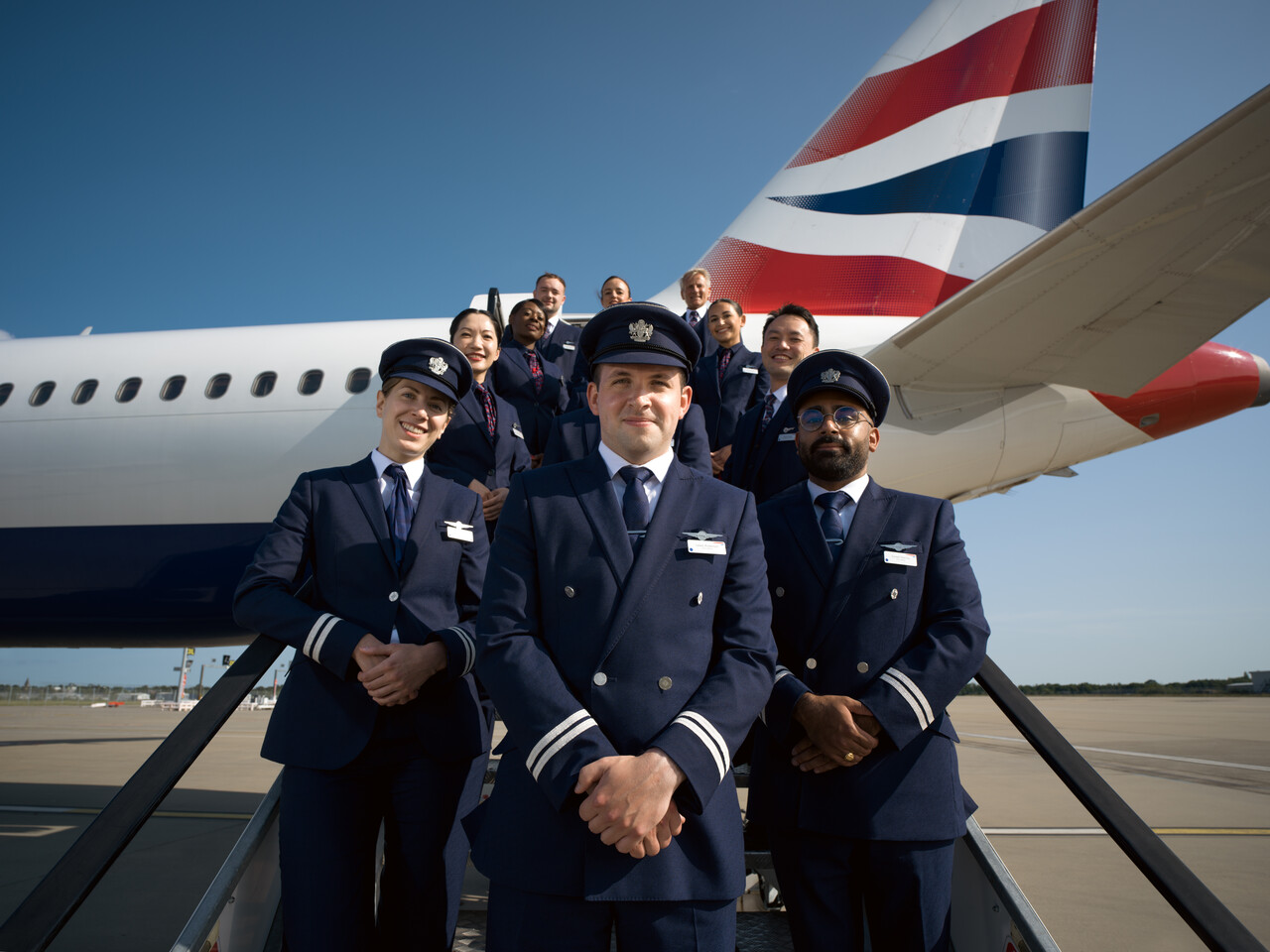
British Airways’ fully funded pilot training programme, the Speedbird Academy, has officially opened its doors for 2026 applications. This year, there are 160 places up for grabs on the scheme, representing an £18m investment from the airline. The course will take the successful applicants from little to no flight experience, all the way through to landing a job as a first officer with the company in 18-24 months, with all training costs covered by British Airways.
With over 20,000 applicants for last year’s intake, it’s clear this is a highly competitive application process, and you’re going to need to be thoroughly prepared in order to be successful. As a current airline captain who came through a sponsored course, as well as the author of the Amazon best-selling ‘How To Become An Airline Pilot’, which guides you through the journey, I’ve created this article to give you a breakdown of each stage of the Speedbird Academy selection process. This article will equip you with the basic tools and understanding that you need to do well in the selection process. It’s worth noting that this is an active document, so I’ll be updating it over the coming weeks, as new information becomes available.
For those wanting the best possible chance of success, I’ve created a highly in-depth online tutorial course, which will help you navigate an airline selection process step by step, as well as flight training thereafter. Anyone who works through that course is going to be in a much stronger position than those who don’t. It can be found by joining our free Skool community here.
I’ve now also created a youtube video, to give you an overview of how to work through the process:
For those looking to work out if the Speedbird Academy scheme is suitable for them, see my comprehensive breakdown of the scheme, including the requirements and my personal thoughts on the positives and negatives here:British Airways Speedbird Academy 2026: Full Breakdown, Requirements & A Pilot’s Honest Review. I want to be clear; I don’t work for British Airways, nor am I affiliated with them in any way. Nothing in this article is ‘official’ and much of it is a mixture of personal opinion and experience.
You’ve got a short window to complete your initial application this year (23rd April 2026 latest), so let’s dive straight into it.
Selection Process Overview
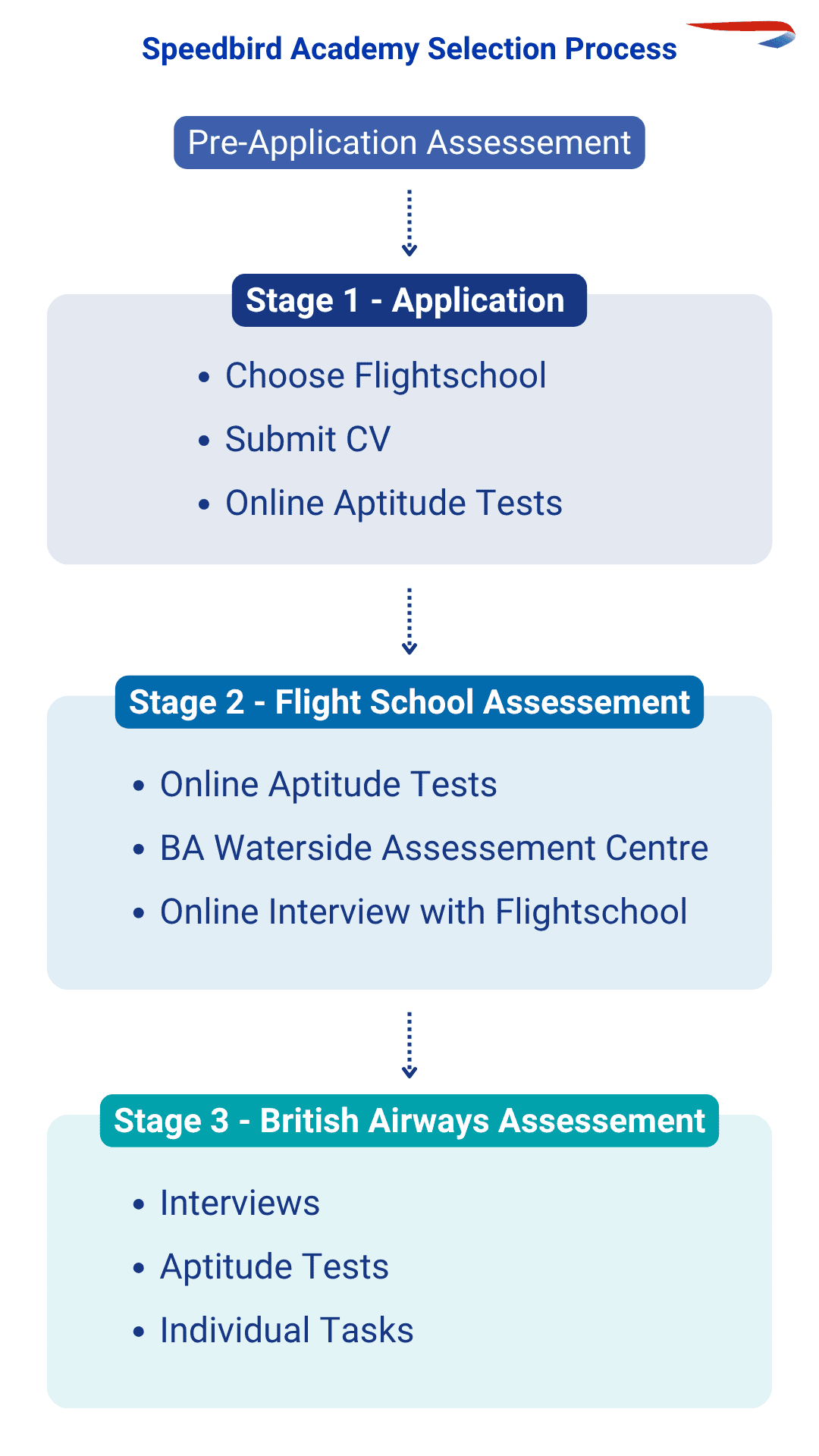
The process this year is slightly different from last year, with a few more stages required before you can actually start your application. Similar to last year, you have the choice of two flight schools, and parts of the selection process will take place with representatives from those schools or at the British Airways HQ. The diagram below shows the overview.
What are the British Airways recruitment team looking for?
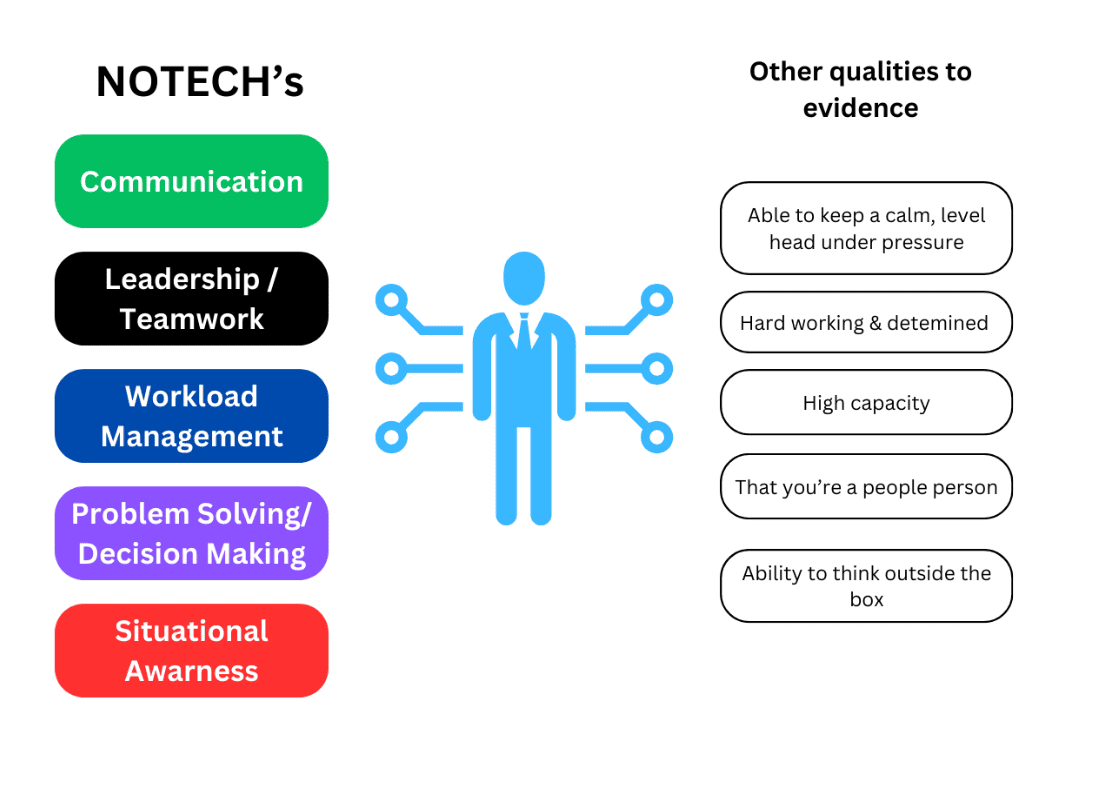
As I explain in my course, the airline pilot world now revolves around competencies and behaviours. Pilot competencies can be split between ‘technical’ and ‘non-technical’ competencies (NOTECHs). British Airways has been very clear in that they are not looking for technical competencies in applicants, although it’s obviously a great thing if you happen to have those anyway. Instead, they’re looking for evidence of behaviours, attitudes, and non-technical competencies.
One reason for this is that technical competency can generally be taught, but behaviours and non-technical competencies are harder to teach. They’re looking for people who already possess at least a foundational level of the competencies and behaviours they’re looking for. Another reason is that technical competencies can only help you through a set number of situations, behaviours and non-technical competencies, however, play a part in almost all situations you’ll find yourself having to manage as a pilot.
So, what are these non-technical competencies and behaviours that they’re looking for? The diagram below is an extract from my book, and shows the key NOTECH competencies we’re expected to possess as pilots.
Further to this, BA will be looking for you to display the following throughout each stage of the selection process, and onward into your career with them;
- A safety-first mindset
- Professionalism and Integrity
- Strong communication
- Teamwork and collaboration
- Resilience and adaptability
- Motivation and commitment
- Learning mindset
- Customer and brand awareness
At the risk of overwhelming you, I’ll also link to British Airways’ job description sheet containing more information on the behaviours and attitudes, along with core traits that they’re looking for in a successful applicant. Obviously, you’ll also need to show a good level of capacity and aptitude in those stages too, but you won’t get very far into this process unless you understand that they’re really focussing on the above behaviours, which you’ll have time to show during your interviews, group exercises, and certain online assessments.
Pre-Application Assessment
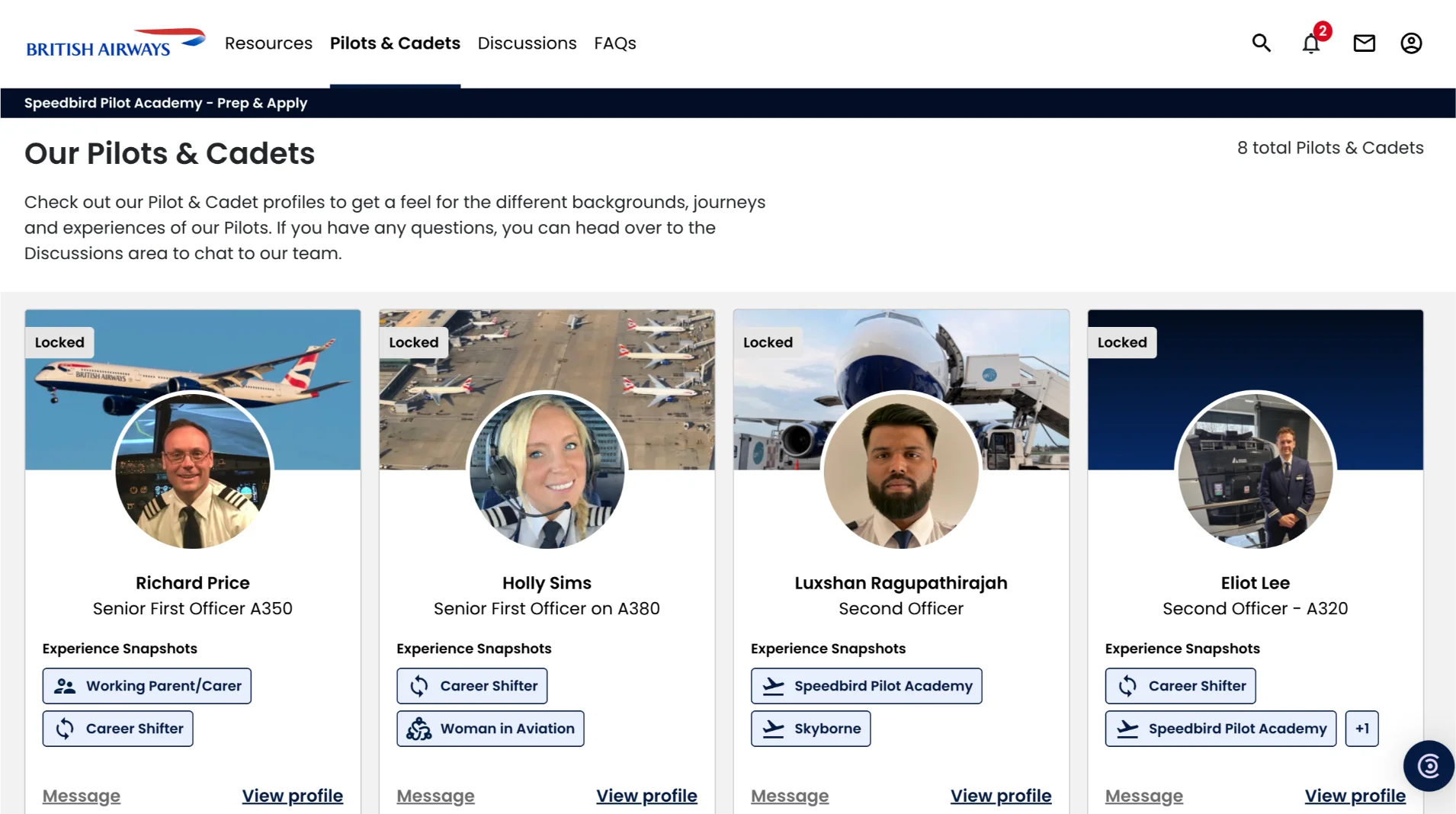
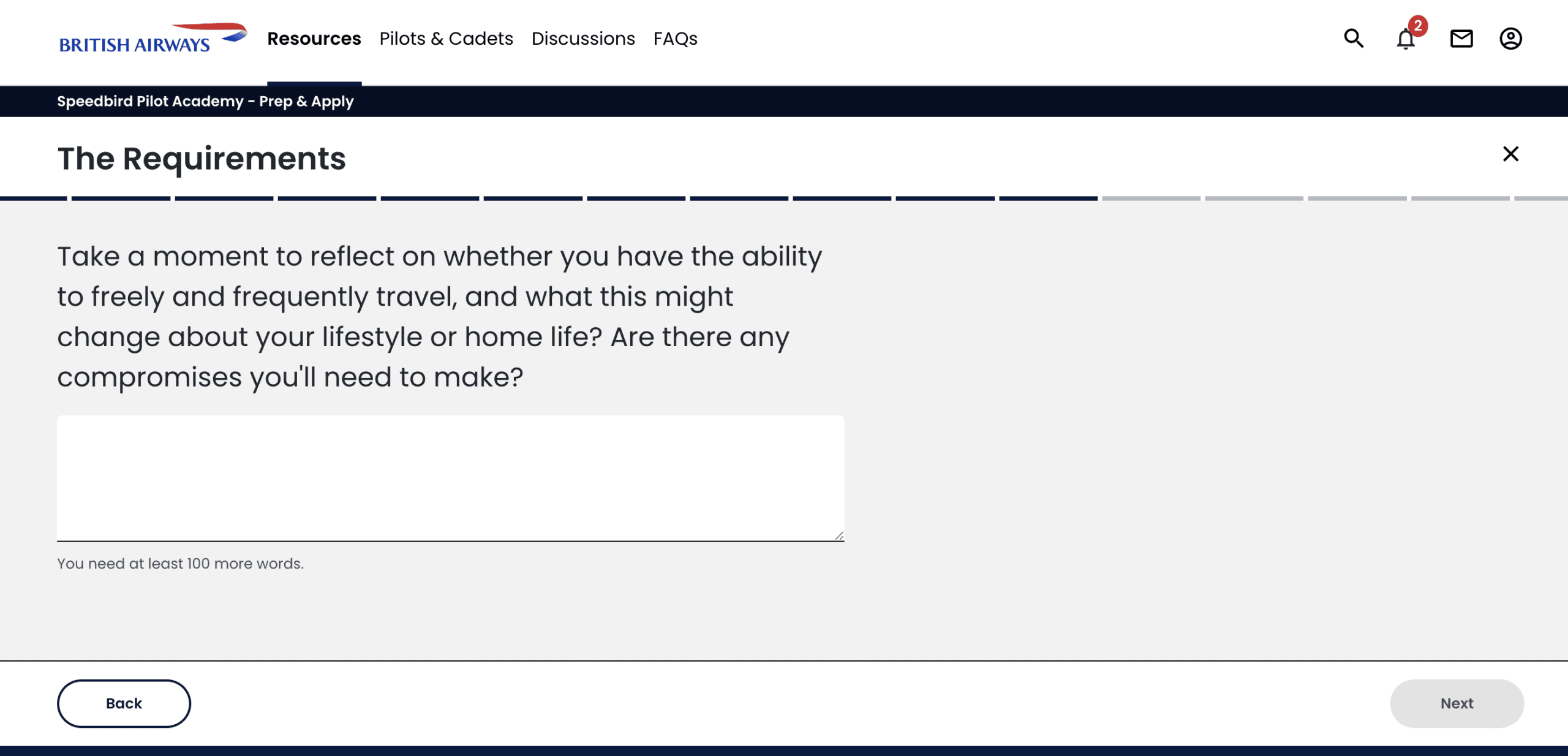
Before you’re able to submit an application, you’ll have to work through an online process to unlock an ‘application code’. This pre-application process takes place on their ‘Prepare & Apply’ portal, which, having browsed it all, is actually a nice idea. This portal has areas for resources, stories from current pilots and cadets, discussions, and FAQ’s.
During this process, you’ll have certain modules to work through, at your own pace, which can be broken into the following three sections;
- The Requirements
- The Commitment
- The Reality
In each section, you’ll have articles to read and videos to watch, which will give you information on all of the above, and check that you understand what the course and lifestyle really entail.
At the end of each section, you’ll have a series of questions to answer. These aren’t trick questions, and there isn’t really a wrong or right answer. I’d say just keep the above behaviours and competencies in mind when answering the questions, but don’t overthink them.
Some of the free-text questions have a 100-word minimum limit, which seems high, given how many questions there are, but I think this is British Airways’ way of weeding out unmotivated people early on. If you don’t have the motivation to write over 100 words for these answers, you likely don’t have what it takes to work through the course.
Some answers are free text, others are selecting how much you agree with a statement. For the latter questions, just think about what the ‘right’ thing to answer would be, given what we’ve already discussed.
Stage 1 – Application and Online Tests
Flight School Selection
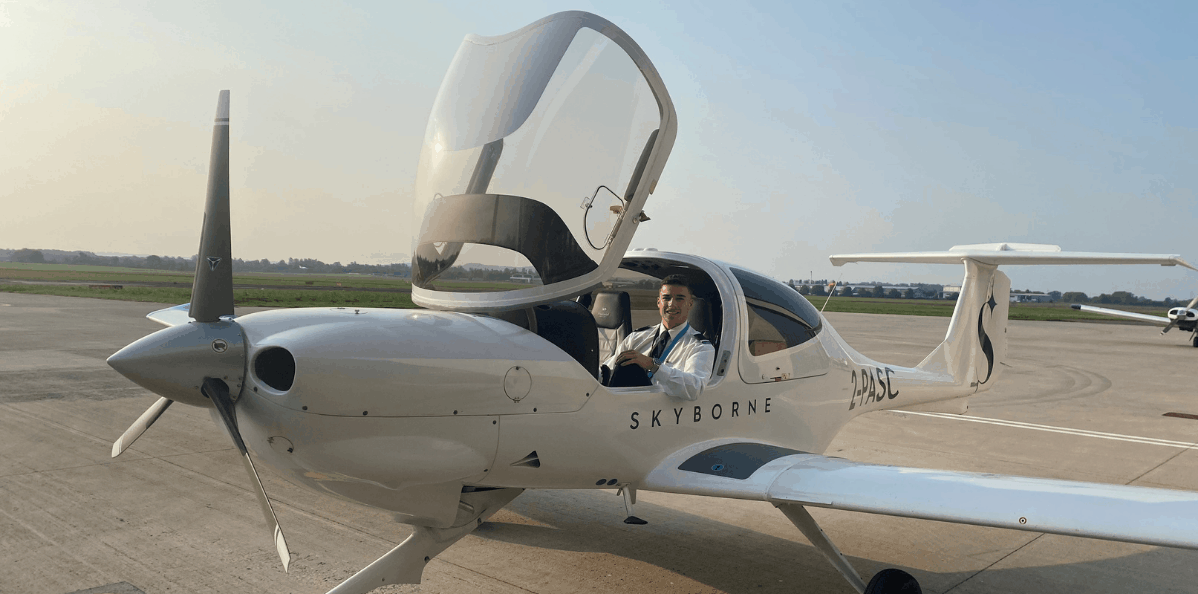
Once you’ve completed the pre-application assessment, you’ll be given an application code to start your official application. The first step is to choose your preferred flight school. It’s worth noting that this is only a preference; British Airways has the right to place you with whichever school they need to.
The two flight schools on offer will run a very similar, if not identical, training programme, so the main thing you should be considering when making this choice is the location of the flight schools.
- UK-based (Gloucestershire)
- You’ll do most of your flight training in Florida, USA, some in Gloucestershire, and some in Bournemouth.
- Based in Spain (Jerez) and also a base in the UK (Oxford)
- Training will be completed between these two bases.
If you’re unable to decide, try speaking to current cadets at these flight schools using the methods discussed in our course. Both are reputable flight schools, and I’ve flown with cadets from both who seemed happy with the overall training process there.
Curriculum Vitae
After choosing your flight school, you’ll have to answer some straightforward eligibility and diversity questions, followed by uploading your CV. This part is crucial. This is your first chance to really showcase yourself, so you need to get this right.
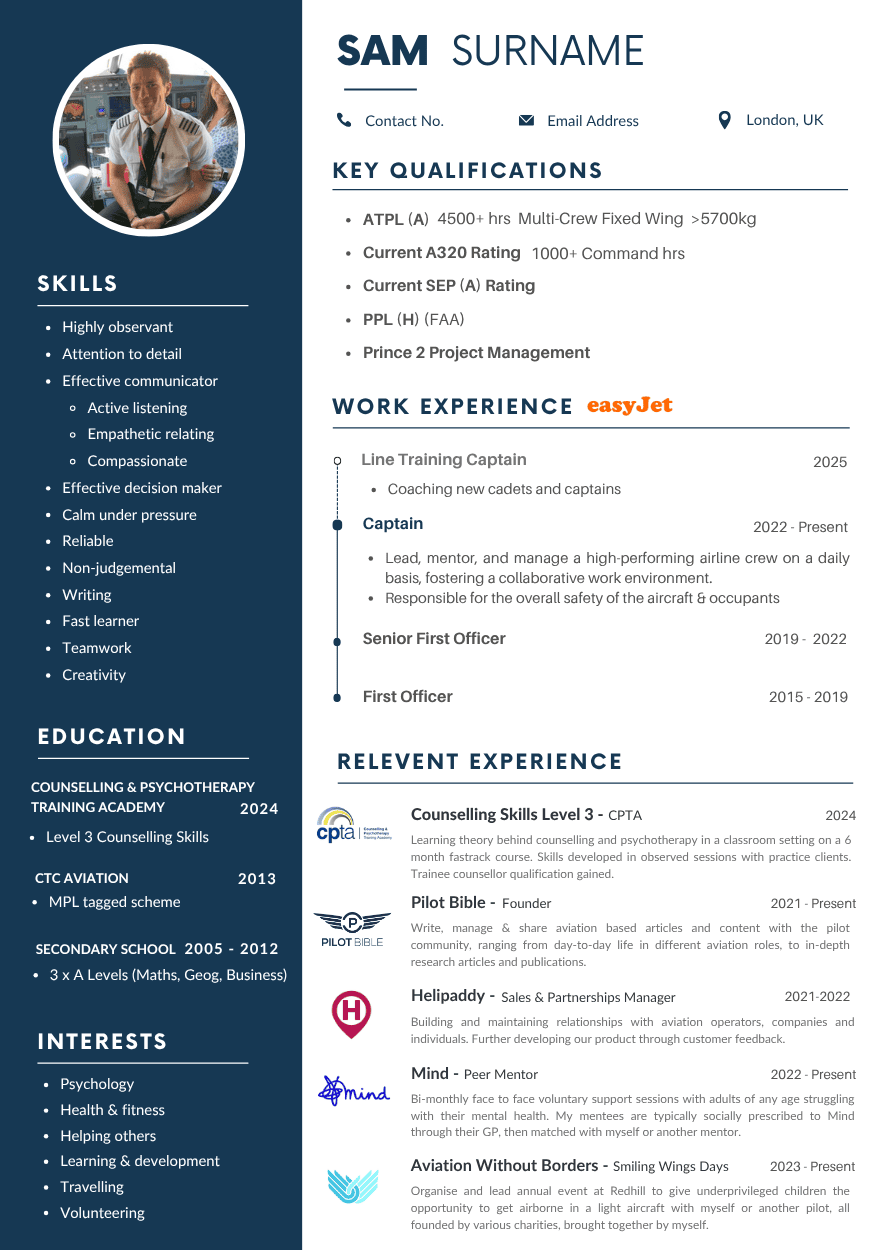
I’ve got an entire in-depth section in the course which will walk you through how to craft a great CV for airline training applications, but to give you some of the key points right here:
CV Tips
- Ensure there are no spelling mistakes. Get it proofread by friends or family for errors.
- Ensure it’s company-and job-specific. It should be clear that this is specifically for the British Airways scheme, and is not a generic CV you’ve sent to multiple airlines.
- Keep it relevant. Cut the nonsense. Only have items on the CV that are relevant to this role.
- A ‘Volunteering’ section is a good idea, as is ‘Personal Interests’. British Airways are known for liking candidates who actively volunteer, and it shows you’re not a robot whilst also giving them something to speak to you about in the interview other than the job.
- Make sure it’s smart and clearly laid out. Put effort into the design. A great resource is Canva.com where you can get a free account, and they’ve got plenty of CV templates on there.
- I personally think adding a photo in this day and age is a nice touch as it adds a face to the name, but keep it professional.
- Take a look at example CVs online
- Send your CV in a PDF format, never in word format. This ensures the formatting stays as you’ve designed it.
CV Dont’s
- Do not lie. You’ll be expected to back up anything you write, in an interview. Make things sound as impressive as you can, but don’t dig yourself into a hole here.
- Write the entire CV with AI. By all means, use it to help you, and maybe it can help you decide whether certain content should be included or not, but don’t create the whole thing with AI.
You’ll also be invited to upload supporting evidence, so in here you could upload proof of any relevant qualifications/medicals etc.
I’ve attached my CV below for reference. I’m not saying this is the perfect CV, but it hopefully gives you a rough idea of something to aim for. Obviously mine has lots of flying experience on it, yours won’t, but they assessment team also won’t expect it. Just make sure the ‘work experience’ section is relevant to the behaviours and competencies for the role.
Initial Online Aptitude Tests
Once you submit the application, you’ll be invited to start your initial online aptitude tests. From the moment you submit that application, you’ll have 2 days to complete these tests, which will take a total of 30 minutes.
There are 5 initial online tests. Unfortunately, British Airways states they don’t wish for the actual tests to be distributed, so I’m unable to share actual screenshots. Instead, I’ll can share screenshots of practice questions, and tell you how to best prepare/form your answers.
Ahead of taking these tests, I’d recommend looking at the Speedbird Academy package on PilotAptitudeTest.com. They’ve developed tailored tests which are very similar to what you’ll receive throughout this entire process. They’re not absolutely identical, and they do come at a cost, but they’re a great way to prepare.
To help the PilotBible community, they’ve very kindly offered our readers a 10% discount on any package you wish to purchase. To access, follow this link and add the code ‘PILOTBIBLE‘ for the discount.
- Situational awareness and judgement questions
You’ll answer a number of questions designed to test your judgement. A scenario will be explained to you, and you’ll have four different answers.
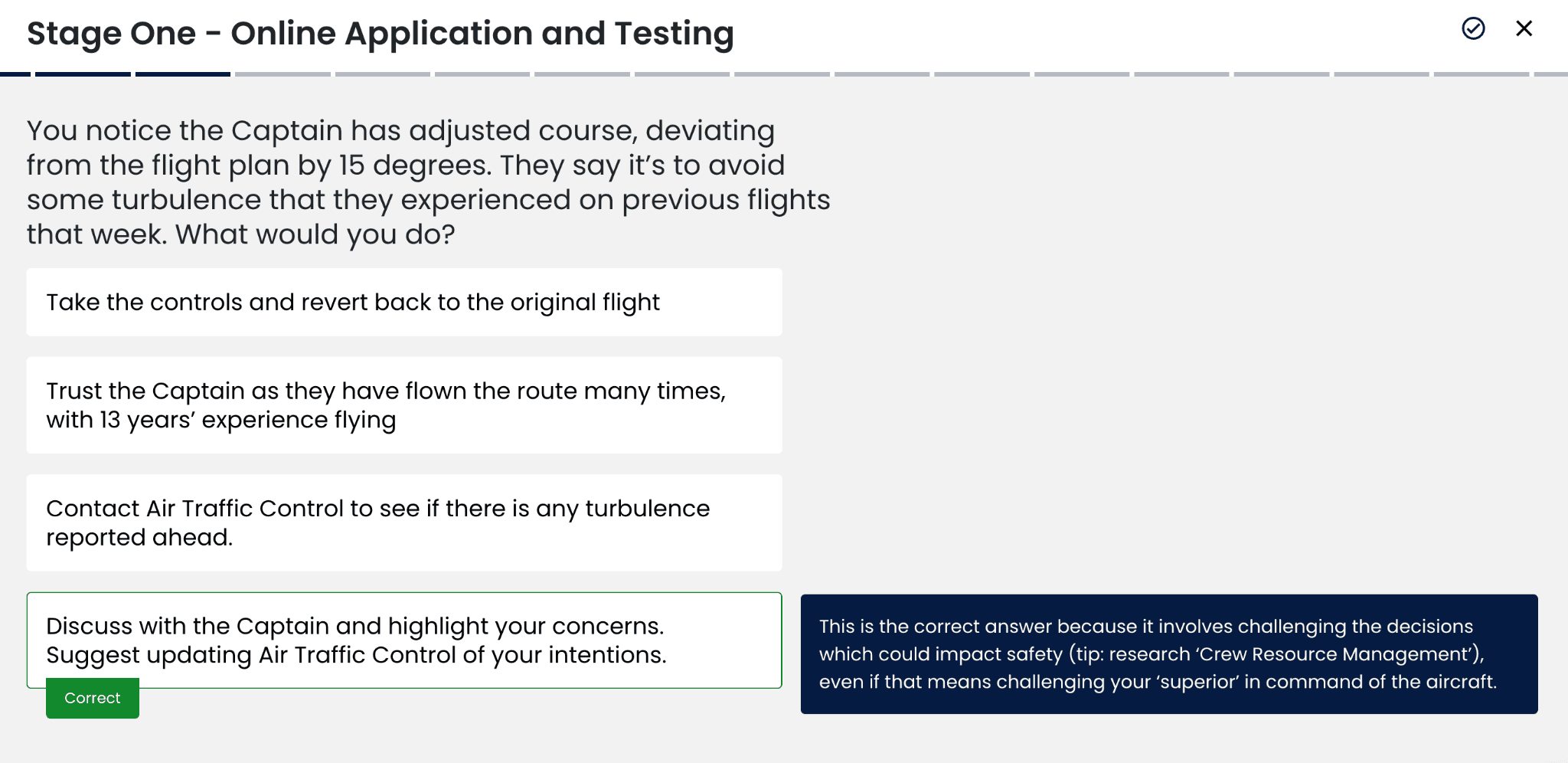
In the real test, each answer will have a slider, ranging from ‘more’ or ‘less’. You have to move one slider to ‘more’, indicating this is the action you’d most likely take, and another slider to ‘less’, indicating this is the least likely action.
My top tips here are to recall those behaviours, attitudes, and traits that they’re looking for, most notably putting safety first. Answer truthfully, but have these in the forefront of your mind as you do, and you’ll sail through.
- Maths test
This will be a relatively basic maths test, with GCSE style questions. Think multiplications, fractions, percentages, ratios etc. If you need help with these, review the methods here
https://www.bbc.co.uk/bitesize/examspecs/z8sg6fr. Bear in mind that you should have the ability to look up how to do certain calculations while doing the test, but you’ll also be on a time limit. You’ll also be able to use a calculator, so have one in front of you.
- Checking Test
This will test how you work with data and patterns, your ability to spot errors, and your attention to detail. Below is an example from their preparation area.
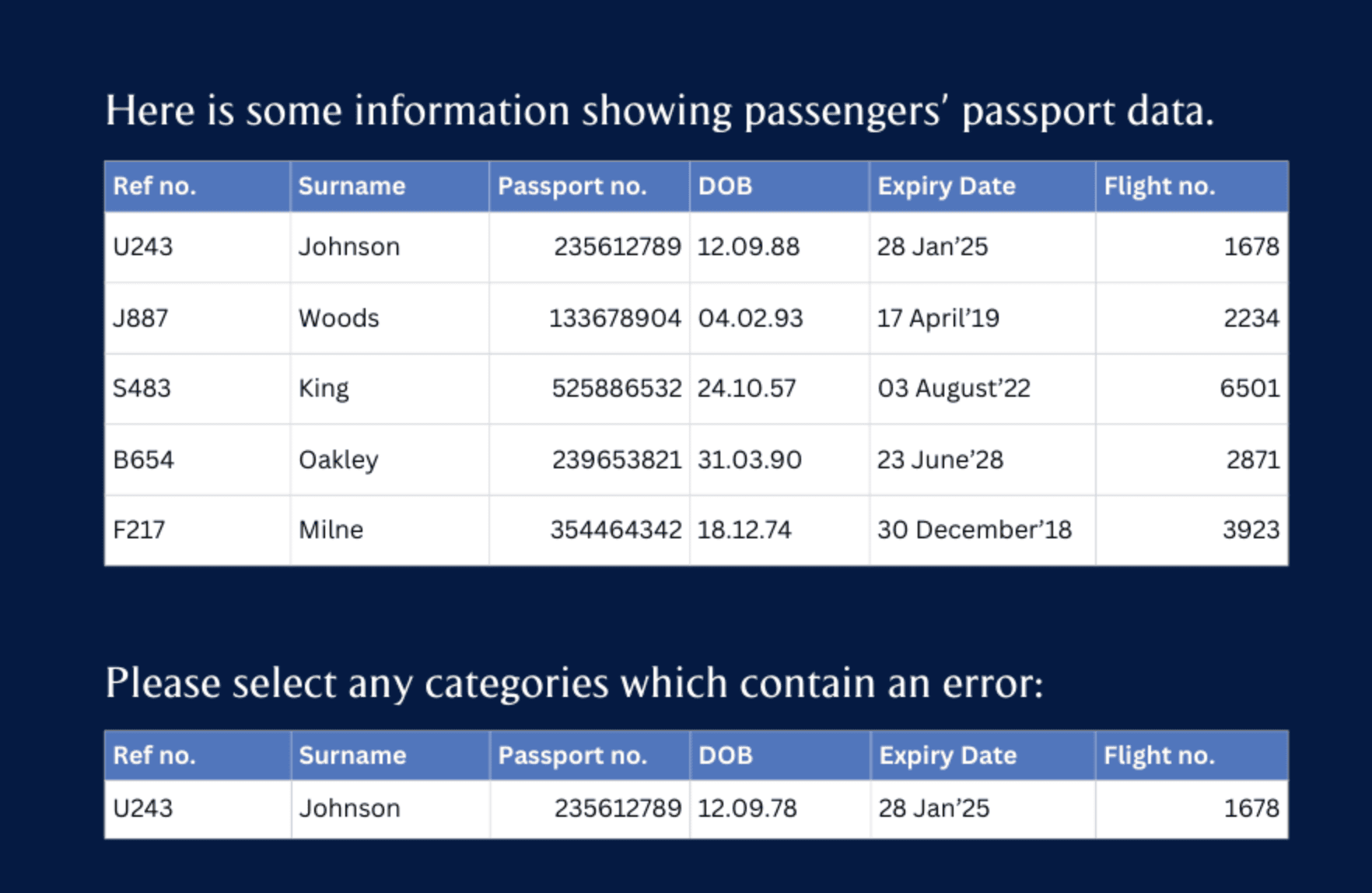
This part of the online testing is quite simple, but if you wish to practice for this checking test, British Airways point you toward these pages on 123test.com and Assess.ly, but the ones on PilotAptitudeTest.com are also great.
- Listening Accuracy Test
They don’t give too much away here, but it sounds like this test is designed to test your capacity to listen to various pieces of information in a busy-sounding environment. Just do your best here, and make sure you’re in a quiet environment first.
- Pilot Communication and Motivational Activity
This test will initially have you running through a scenario and completing relevant tasks as you go. It’s designed to test your communication skills.
You’ll be asked about your motivation for applying to the scheme. Make sure you have this ready ahead of time. Make sure your answers are very specific about why you want to work for British Airways specifically, why now, and why this scheme in particular. Think along the lines of the high standards and the level of professionalism that British Airways represents, but also explain what you feel you could bring to the table.
Stage 2 – Flight School Assessment
Once you’ve passed the online testing in stage 1, you’re through to, well, more online testing. The joys! The title that British Airways has given to this section is slightly misleading if I’m honest, as the first two parts are still more with the airline than the flight school. This stage is broken down into three stages;
- Online Aptitude Tests
For this round of online aptitude tests, it looks like British Airways is using the CUT-E software. You’ll be faced with a number of different tests, which will essentially be a mix of memory testing, numerical reasoning and pattern recognition, amongst other things.
To best prepare for these, BA themselves refer you to the AON website, where you can practice questions.
If you look at the Speedbird Academy package on PilotAptitudeTest.com, they have replications of the style of tests that you’re going to be faced with at this stage, too, and it’s a really great resource to prepare yourself. For readers of this article, if you follow this link and use the code PILOTBIBLE, you’ll get 10% off.
To see other examples of the type of thing to expect during these online tests, take a look at the Jet2 Selection Process post and our online video tutorial, in which I also run you through how best to navigate these.
- British Airways Assessment Centre – Waterside HQ

This will be the first in-person part of the selection process, taking place at BA’s Waterside HQ facility next to London Heathrow. It will be a great chance for you to meet the other candidates, as well as representatives from British Airways. It looks like the day will be split into two separate parts.
- Group Exercise
This is a way for you to be assessed in a group environment, showing how you operate within a team. You’ll usually be sitting around a table with other candidates, with assessors sitting behind you, taking notes.
While exact scenarios will vary, they will often be one of, or a combination of, these three tasks:
• Discussion-based
Such as ‘Current affairs’, ‘Views on improving an airline’, or ‘Challenges facing an airline’
• Problem-based
Such as ‘Stuck on a desert island’ or ‘Sinking ship’ or ‘Lost passenger baggage’
• Task-based
‘Build a bridge from these straws’ or ‘Build the tallest tower out of these cups’
The assessors are looking for the NOTECH competencies here, but also that you can work effectively and efficiently as part of a team. They’re more focused on your interpersonal skills and NOTECHs than the actual outcome of the task.
Group exercise top tips
- Communicate well – actively listen, speak clearly, and be confident when you have something to say.
- Use others’ names – everyone’s name should be very visible.
- Include everyone and ask for others’ opinions. Take those opinions on board.
- Keep an eye on the time – they’ll usually be time-limited tasks.
- Make sure someone is the designated timekeeper. You could always offer yourself up for this role.
- Throw all your ideas into the mix. Don’t walk away wishing you’d said something more.
- Don’t necessarily take the lead. If it needs to be taken, then by all means offer yourself to step up and take it, but don’t overpower others to take it.
- Don’t be shy.
- Don’t interrupt others – even if you disagree. Wait for them to finish until you say your piece.
- Aptitude Testing
The second part of this day will be completing BA’s aptitude test. This will almost certainly be using the ‘Eagle’ software that they’ve used for years. The first part will test your coordination as you use a joystick to manoeuvre an aircraft through specific gates.
After that, you’ll immediately move on to the capacity test, which is a 25-minute-long test designed to overload you. You’ll be trying to manage radio communications, descent clearances, fuel issues, and a variety of other tasks all at the same time.
The best way to prepare for this capacity test is to use the software that’s available from either of the following two companies. On both websites, you can navigate to the airline which you’ll be testing for, and the software you’re given access to will be very similar to that which British Airways uses for their testing.
I’ve negotiated discounts for readers of this article with both SkyTest and PilotAptitudeTest. If you follow the SkyTest link, a €10 discount will be automatically applied. For PilotAptitudeTest, follow the link above and add the code ‘PILOTBIBLE‘ at checkout for a 10% discount.
My top tips for the aptitude test are to remain resilient and recover quickly when you become overloaded. These tests are designed to push you past your maximum capacity. There will be times when you miss something, but just carry on and remain focused on the task.
3. Online Interview with Flight School
To round off stage two, you’ll have an online interview with representatives of your chosen flight school. Interviews are what most people dread the most, but if you use the below to prepare thoroughly, you’ll stand a great chance of success.
Before you get to this stage of the process, I’d genuinely recommend grabbing a copy of my book here or watching our online tutorial course, because both have entire sections dedicated to how to best prepare for and nail the selection day interview. I can’t do all the information from those resources justice in this article, but I’ll share some key things to think about.
This interview is planned to last 45 minutes, and is said to be about your motivation to become a pilot, your understanding of what’s involved, and your work and study style. It’s essentially a chance for them to really get to know you, but it’s also a chance for you to get to know them.
What sort of things are they likely to be thinking about?
• Is this person personable? Would I like to sit in a flight deck next to them for 12 hours at a time?
• Do they have what it takes to not only get through the training process, but thrive on the line?
• Will they represent our brand correctly? (While pilots aren’t necessarily customer-facing, they do have to have customer service skills.)
• Does this person possess or have the ability to possess the NOTECHs we are looking for?
• Can this person back up what they’ve included in their CV?
There will likely be a section of this interview which contains behavioural and competency-based questions. The interviewers will ask you to recall experiences from your past to highlight times you’ve used certain skills. They may introduce a hypothetical situation to assess your thought processes.
Behavioural and competency-based questions often start like this:
• Can you think of an example of a time where you have demonstrated…
• Describe a way in which…
• How do you cope when…
• What would you do if…
To recap the NOTECHs they’ll be focusing on, along with a few more points:
- Leadership & Teamwork
- Communication skills
- Problem Solving & Decision Making
- Workload Management
- Situational Awareness
- A safety-first mindset
- Professionalism and Integrity
- Resilience and adaptability
- Motivation and commitment
- Customer and brand awareness
A great technique to follow when answering these competency-based questions is using the acronym STAR. It’s a way to keep your answer concise and structured.
Situation – Give a bit of background
Task – What was the task?
Action/Approach – How did you go about it?
Result – What was the outcome? How does it relate to the competency?
A top tip here: Have 5 or 6 prepared scenario examples before any interview. Ensure these examples sufficiently demonstrate one or more competencies, and during the interview, you can pull out the example which is most relevant to the question being asked.
For more tips and run-throughs of delivering STAR answers, watch the interview section on our online tutorial course on Skool, and remember the better you prepare, the less nervous you’ll be on the day.
Stage 3 – British Airways Assessment Day
The final part of the selection process brings you back to Waterside, British Airways’ HQ. The website suggests that you’ll be undertaking the following;
- Interviews
These will be split into scenario-based interviews and reflective-based interviews. Use all of the tips above to prepare. Ensure you’ve also reflected on your own journey through the process so far, and have ideas to share regarding what went well and where you could’ve improved.
- Aptitude testing (again!?)
It looks like you might be in for another round of aptitude testing. It will very likely be the exact same test as the previous stage, so practice and prepare in the same way. If you recall any mistakes you made last time, consider how you could avoid them this time.
- Individual Task
It’s a little ambiguous what this is at this stage, but it looks like it’s about decision-making and working through a task. Again, keep those behaviours and competencies we discussed at the start, at the forefront of your mind as you complete this task.
Process Complete
Once you complete this day, that will be the selection process complete. It’s worth noting here that if you’ve made it to any stage of the process, it’s an achievement. To make it all the way to the end, however, is an absolutely epic achievement and something you should be very, very proud of, regardless of the outcome.
For candidates who’ve completed the last day, you’ll likely hear over the next week or so, whether you’ve been successful in landing a place on the intake. For those that didn’t quite make the cut, don’t be hard on yourself. Acknowledge how far you managed to make it, and consider what you could do differently if you wish to apply again in the future.
For those who don’t get a place on this scheme and are considering other options, take a read of my article here which walks you through the various different options out there, along with opinions on each.
Hopefully this article’s been of some help to you! I want to add a quick caveat that all of the above is based on what British Airways has published on their website, along with my experience of selection processes. Some things may not happen exactly as described above. This article should be used as a tool to help you prepare, and is not an exact guide to what will definitely happen at each stage. British Airways may, for example, actually have you for an interview while you’re at the assessment centre in stage 2. My advice would be to just be as prepared as you can at each stage.
For those who have enjoyed the article, please do take a look at our online tutorial course, along with grabbing a copy of my book ‘How To Become An Airline Pilot’, both of which will walk you through selection processes and much, much more!
For help at every stage of this process, including interview prep, group exercises, and, of course, the aptitude tests, take a look at the Speedbird Academy package on PilotAptitudeTest.com. Follow this link and use the code PILOTBIBLE for 10% off.
Thanks for reading.
Helpful Links
PilotBible How To Become An Airline Pilot Online Tutorial Video
7 Responses
Hi, thanks for the great article, really useful!
Do you think there’s any chance of getting a discount code for PASS (pilotassessments.com)?
I’ve heard their BA Speedbird stuff is pretty close to the real tests, so it would really help.
Thanks for the kind words. We don’t have a partnership with PASS yet, but I’ll look into it. In the meantime, the ones at PilotAptitudeTest.com cover everything you’ll need.
Thanks!
Hi, any update on a partnership with PASS?
Some people already did the BA assessment with Eagle test and PFD and PASS seems to be the most accurate.
If you can arrange a discount it would be greatly appreciated 🙂
I really appreciate the BA for this program but i would like to know when application for 2027 session will begin
I’m afraid I’m as in the dark as you are! But I’d imagine it would be a similar time next year (early April ish)
Hi, can you get a discount from aviatoracademy.net? Heard good things about it on the SPA forum
Hi, I’m a 14 year old whose dream is to become a pilot one day! I found this article very useful, please could you keep me updated if you upload some more on this website. What would be some great advice for me to use now. For example what I can do to prepare for the time I apply to give me the best chance possible?