

Avionics Fault
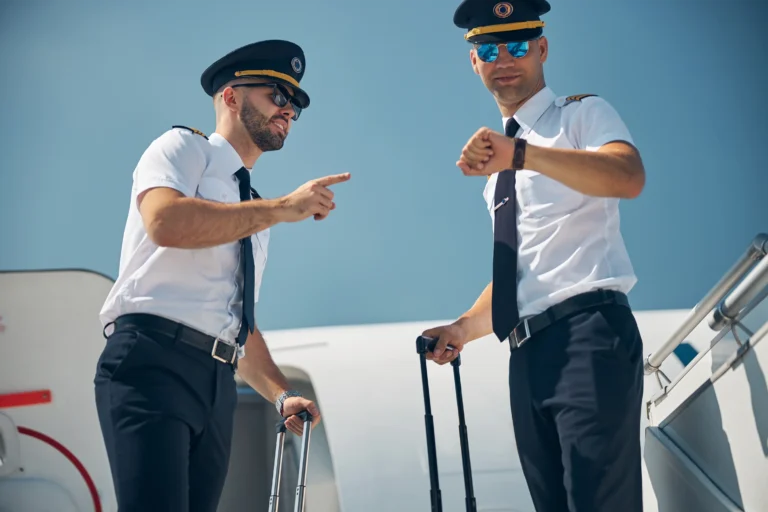
I brief the crew whilst on the bus to the plane, explaining that it should be a relatively easy day out (my bad) from London to the Isle Of Man and back. This briefing used to happen in a relaxed, quiet crew room environment. Now it happens whilst we’re all crammed onto a bus whizzing us around the airport to our aircraft.
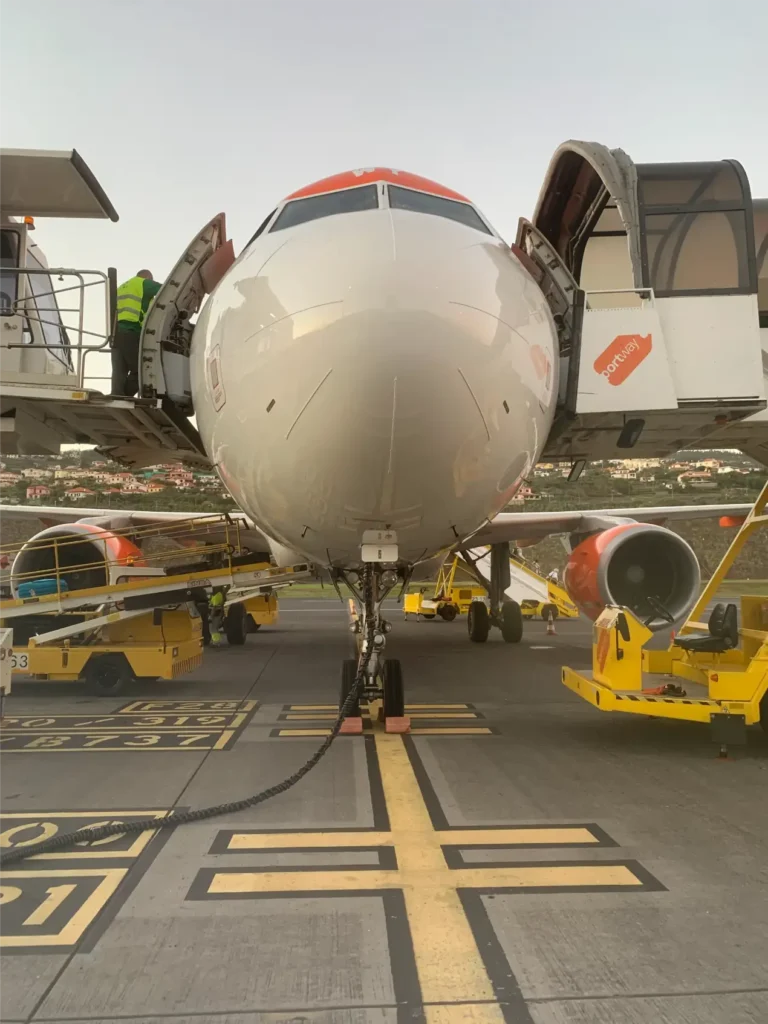
Once onboard the aircraft, I power up the aircraft and get an immediate fault warning with the avionics system. I try a quick reset but it’s to no avail. I pause the aircraft set up to get on the phone to our engineering team to see if they have any ideas. Whilst the phone is ringing, I’m asked by the ground crew to decide whether to ‘release’ the passengers from the gate to start their 10-minute bus journey to us.
I give the OK to the dispatcher to release the passengers as I’m feeling optimistic engineering can help me sort this avionics fault and prevent it being a showstopper. Once through, they run me through a few resets over the phone that we don’t have access to in our manuals, which this time are successful, and the show is back on the road!
Broken Door
The show is only on the road for a matter of minutes before the cabin manager walks in to let me know the rear passenger door isn’t locking into its open position properly. Again, the aircraft set up is paused as I decide to walk to the rear of the aircraft to have a look at the door myself. There is a mechanism called a ‘gust lock’ which locks the door in place when it’s fully opened. This means in strong winds, the door will still stay locked wide open and not be swinging around freely. The gust lock doesn’t appear to be working so although the door fully opens and remains open, with very little force you can move it around.
The initial concern in my head here was for passengers boarding the aircraft and getting hit by the door moving, but it was an extremely calm day with nil wind, so there was no risk of this being caused by the wind. Destination also had calm wind.
I once again call our engineering department and am put into a phone holding queue. The passenger busses have now pulled up to the aircraft, jam packed with people, but the doors remaining closed until the dispatcher has the OK from myself to let them on the aircraft.
In all honesty, at this point, I don’t see the open mechanism of the door being a showstopper for us, which was maybe naïve of me. If it didn’t close properly, obviously that’s an issue, but not locking into its open position on a calm day? The options right now are to send the passengers back to the terminal gate which will delay the flight if the door is a simple fix, or keep them on the bus like sardines for who knows how long, or just let them board whilst I’m still in the phone queue.
I elect to allow passengers to start boarding. I’d rather them be comfortable whilst we sort this issue and give us the best chance of getting away on time. As I do, I finally get to speak to an engineer who informs me that if the gust lock is broken, we will be limited to 105 passengers onboard. I know we have 136 passengers who checked in at the gate, so I very quickly get to the dispatcher to ask her to stop the last bus leaving the gate (you usually get 1-2 busses first, and then they’ll go and pickup the next load of passengers again) however on this occasion it was too late….all 136 passengers were already making the way up our stairs as they all squeezed onto 2 bigger busses. By the time we’d figured all of this out, the majority were already on board. Rather than spin the last few around, we decide to continue the boarding and hope we can sort the issue.
10 minutes later an engineer arrives and I have to try and discreetly make my way down the cabin without drawing too much attention to myself, so decide to ironically keep my high vis on, which hides my Captain stripes for now and prevents people becoming alarmed or asking multiple questions and stalling me.
The reason that we are limited to 105 passengers becomes clear in my head…..in the event of an emergency evacuation, the door will be thrown open, or opened with power assist. If there’s no gust lock to lock the door, it opens with such force that it will simply swing straight back and block the exit, preventing people evacuating. For this reason, the exit is considered totally unusable by our manuals, which means we’d have to evacuate out of just 3 doors, which limits the amount of passengers we can evacuate in a regulatory approved amount of time.
The engineer shows me what the cause of the fault is but isn’t able to fix it immediately. He goes to get some tools but he isn’t sure if they’ll help. This give me an opportunity to start thinking ahead…
Back to the flightdeck I go to make more phone calls to our operations and customer service team….I’m now doing what pilots do best and start to think worst case scenario….trying to understand how it’s going to work if the door can’t get fixed. On my walk back down the cabin to the flightdeck I have a quick chat with the cabin crew, dispatcher and first officer to try keep everyone as in the loop as I am.
At this point I’m aware all passengers are now on board and will be expecting a routine PA from the captain shortly, or one explaining what the holdup is. I don’t like doing PA’s before I have a plan of action or fully understand the extent of an issue myself, so I decide to leave the PA until after my phone call to our operations department.
I ask operations if there is another plane available for us to take, but the response is negative. I then ask about how it’s going to work if we need to remove 31 passengers from the flight…how do we decide who gets kicked off? What compensation can we offer them etc.
I’m told I’ll have to first ask for volunteers, who will be offered £500 each to get off the flight and get on a later flight, although the only other flight to the Isle of Man that day only has 13 seats free on it….
I try to cover all scenarios with my questions……what happens to the passengers who don’t get on that flight? What happens if we get fewer than 31 volunteers….how do we then decide to kick off? What if we get more than 13 volunteers, who gets those 13 seats? What if we get no volunteers? What happens to the passengers who are kicked off but can’t get on the flight later that day?
I know I’m the one that will be delivering this news and the person to which all of the above questions will be asked, so I’m trying to give myself the best possible understanding of how the situation will work.
All in all, whilst the team were very helpful on the phone, all of the options were pretty horrible for our passengers. After we run out of volunteers, people would be chosen by sequence number i.e the last to check in would be the first off the plane. The first off wouldn’t be getting a flight until the next day. Standing at the front of the cabin explaining to the passengers that we’re going to kick 31 of them off was not what I wanted to be doing at 07:00. It’s also not why I chose to become a pilot.
After I’ve got all the facts I need from the customer service team, I decide it’s time to do a PA. At this point I’m not going to let the passenger know they may be getting off, but simply be transparent with them about the issue we have….a mechanism in the door not locking the door open. They’ve all now seen the engineer at the back and me walking up and down the plane a few times, so my cover is likely blown. I leave it quite open ended and let them know that I’ll keep them in the loop with the plan of action once it’s been decided.
After this PA I walk once again to the rear of the aircraft, this time no high vis, and feeling many more eyes on me. In all honestly, it’s quite an uncomfortable feeling for someone who’s naturally very introverted.
This engineer has now cleaned the mechanism inside of the door and the issue has almost subsided but is still intermittent. We figure out that you can ‘pre set’ the lock to engage by moving it manually before closing the door, so it will lock into place when the door first opens each time. This means if we pre-set it before closing the door, it will hold in the event of an emergency evacuation. We tested this a few times and the engineer was satisfied with this as a temporary measure, as was I. I got my hands dirty doing it myself, so if it happened downroute, I could explain to the engineer exactly what needs to be done with the door. By going with this as a temporary measure, it saves 31 people being booted off the plane, and potentially many more passengers later that day. The engineers can then have a proper look at the door tonight.
I asked the cabin crew who was working at that door to open it as she would in an evacuation so I can watch it, and to check she’s happy with it. The door is thrown open and locks into place. Good to go! Or not..…the cabin crew isn’t happy. She explains she’s worried the door won’t open at all when we come to evacuate and she’ll have to tell everyone to use another door, and is therefore refusing to go with it. I spend a few minutes hearing her concerns, but calmy explain that there is absolutely no issue with the door opening mechanism, showing her this a few times over until she is happy.
Back to the front to let everyone know the good news and we’re on our way.
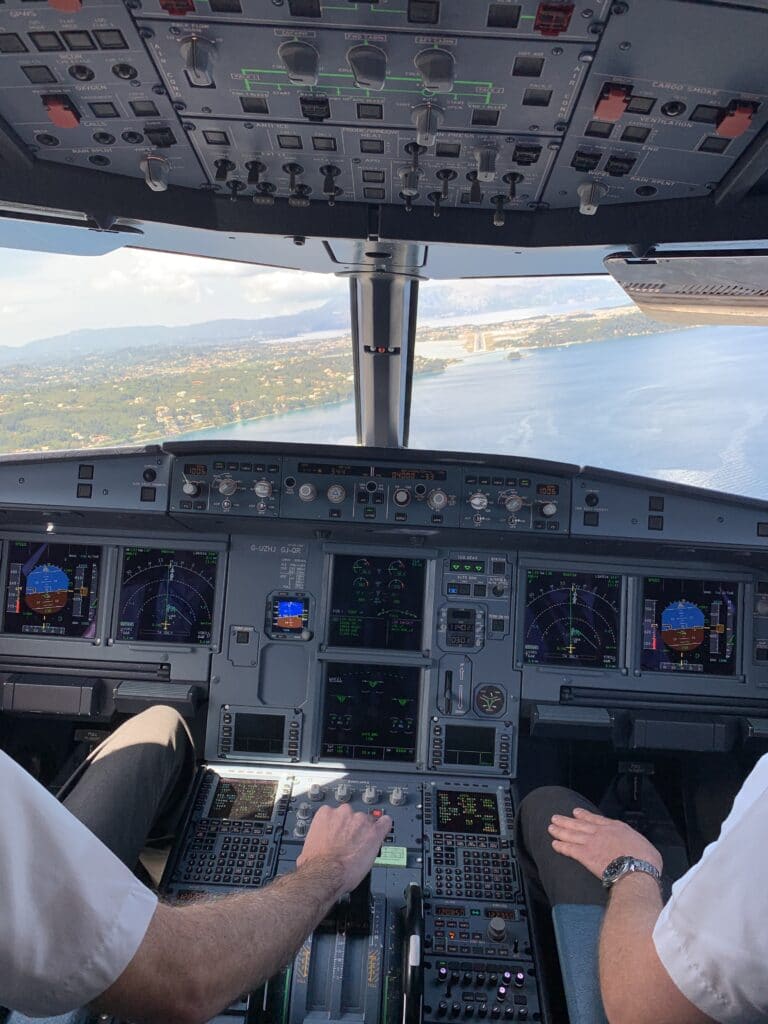
It’s a very short and busy hop over to the Isle of Man. A stunning day as we arrive and for once I can see the whole island. It’s such a spectacular morning that I elect to fly a manual approach, disengaging all automatics and guidance computers and hand fly the final 5 minutes of the arrival and approach.
Airport Closure
As soon as we’ve got the passengers off in Isle of Man, the dispatcher comes on to share some delightful news…..
Not only do we have an air traffic control slot for just over an hour’s time due to congestion in the airspace around London, but Isle of Man airport is also closing for a 30 minute period around that hour due to ATC staff shortage. Lovely!
It’s only going to take us 25 minutes to get all the passengers on so we it’s decision time;
A – Do we get everyone onboard, put a ‘ready message’ in with ATC & hope that the slot comes forward, as it sometimes does, and we can depart just before the airport closes?
Or…..B – If the slot doesn’t come forward, we’ll have 200 passengers sat on this plane for almost an hour and a half before we move, is it better to just let them stay in the terminal where they can relax and have access to food etc for the next hour and a half, but we’re accepting the fact that we’re going to be very late and not giving ourselves a chance to get an earlier slot?
I have a quick chat with ATC who informs us we’ll need to be calling for pushback 15 minutes before the airport closes in order to give us time to depart.
I opt for option A, feeling optimistic about a slot improvement. The second everyone is boarded, we place a ready message into Eurocontrol (see our post about ready messages here) and I do an honest PA to the passengers letting them know we essentially have 15 minutes for the slot to come forward, or we’re going to be stuck on the ground for another hour.
I ask ATC if we are able to taxi down to the runway hold point and shut out engines down there which in my head would bring multiple benefits. It means our tug team and ground crew can leave us and we would be in a better position to take a slot if it did come through. Even if it didn’t improve and we had to wait out the airport closure, we’d save ourself 15 minutes of pushback & taxi time as we’d be there ready to go as soon as the airport re-opened. My ‘thinking outside the box’ request got denied ☹
I then spend 5 painful minutes waiting on hold on the phone, trying to get through to our flight planning department on the phone to once again ask them if there are any re-routes or anything they can do to improve our slot, or if they can just prioritize us, but they draw a blank.
With 2 minutes to go until the 15-minute mark, we surrender our efforts and accept our fate. It’s disappointing that once again we’ve got 200 people behind us that are now delayed despite our best efforts. It’s becoming a running theme this summer.
I use the airport closure delay as an opportunity to allow passengers to come into the flightdeck, sit in our seats and ask any questions they may have. It always helps kill the time for both us and them!
Once the airport opens again, it’s another short but busy flight back to London.
The day was originally planned to be a 4 hour 30 duty time, I’m now leaving around 7 hours after I first arrived at work. It’s once again been a day that’s revolved pretty much entirely around crew & passenger management, rather than the flying itself.
4 Responses
Great read as always. Keep them coming! 👍🏼
Your blog has become an indispensable resource for me. I’m always excited to see what new insights you have to offer. Thank you for consistently delivering top-notch content!
Your blog is a treasure trove of knowledge! I’m constantly amazed by the depth of your insights and the clarity of your writing. Keep up the phenomenal work!
Muchas gracias por la informacion. Gran aporte de esta web. Gracias!!