How to Become an Airline Pilot in 2026 (Updated Guide)
Learn how to become an airline pilot in 2026 with this updated guide. Training routes, costs, MPL vs ATPL, funding options, and airline advice.



It’s been over 30 years since the private owner helicopter world has been rocked by a new aircraft concept, but things are about to change. Back then it was Frank Robinson introducing the R22 and R44 which caused a serious shake-up in the rotary industry. Those machines are now the world’s most popular general aviation rotary aircraft with over 10,000 of them gracing our skies, but apart from a few minor alternations, the Robinsons flying around today are still essentially the exact same aircraft that were designed back in the 1980’s.
Given how innovative and forward thinking the aviation industry is as a whole, it’s surprising that the general aviation helicopter market hasn’t really seen any notable advancement or innovation for three decades. Whilst the utility and commercial helicopter market has seen substantial development in state of the art aircraft such as the AW169, these aircraft are well outside the realm of affordability for the majority of private owners and commercial operators.
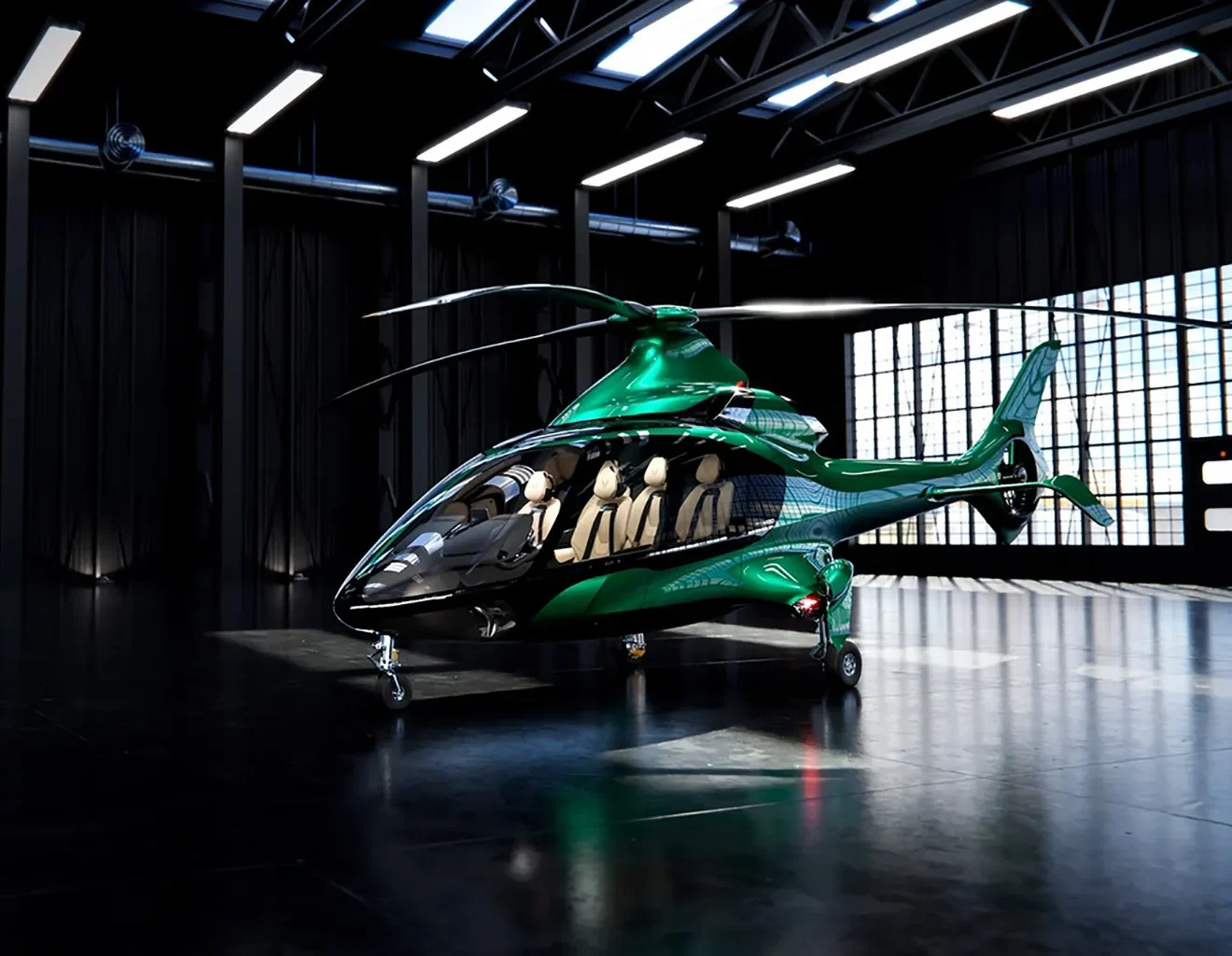
Ladies and gentlemen, if you’ve been living under a rock and haven’t heard of them already, I’d like to introduce you to Hill Helicopters. This UK based helicopter company are about to send a tidal wave through the industry and have been likened to the ‘Tesla of the helicopter world’. In this article we’re going to explore why. I’ve been geeking out on this company since I first heard about them 2 years ago whilst working for the helicopter tech start-up Helipaddy, and I’ve since avidly followed their progress and updates.
It’s the first time in my 10+ year aviation career that I’m genuinely excited about the development of a new aircraft, one which I believe is going to change what general aviation means for our generation.
Founded by Dr. Jason Hill, a visionary individual with a deep passion for both aviation and engineering, Hill Helicopters’ mission is to make helicopter flying more accessible, enjoyable, and safer than ever before, whilst also setting new breakthrough standards for performance and luxury. They aim to revolutionize the general aviation helicopter market through blending the most up-to date advanced technology with elegant design, at a price point that’s more affordable than ever before. Who doesn’t like the sound of that?
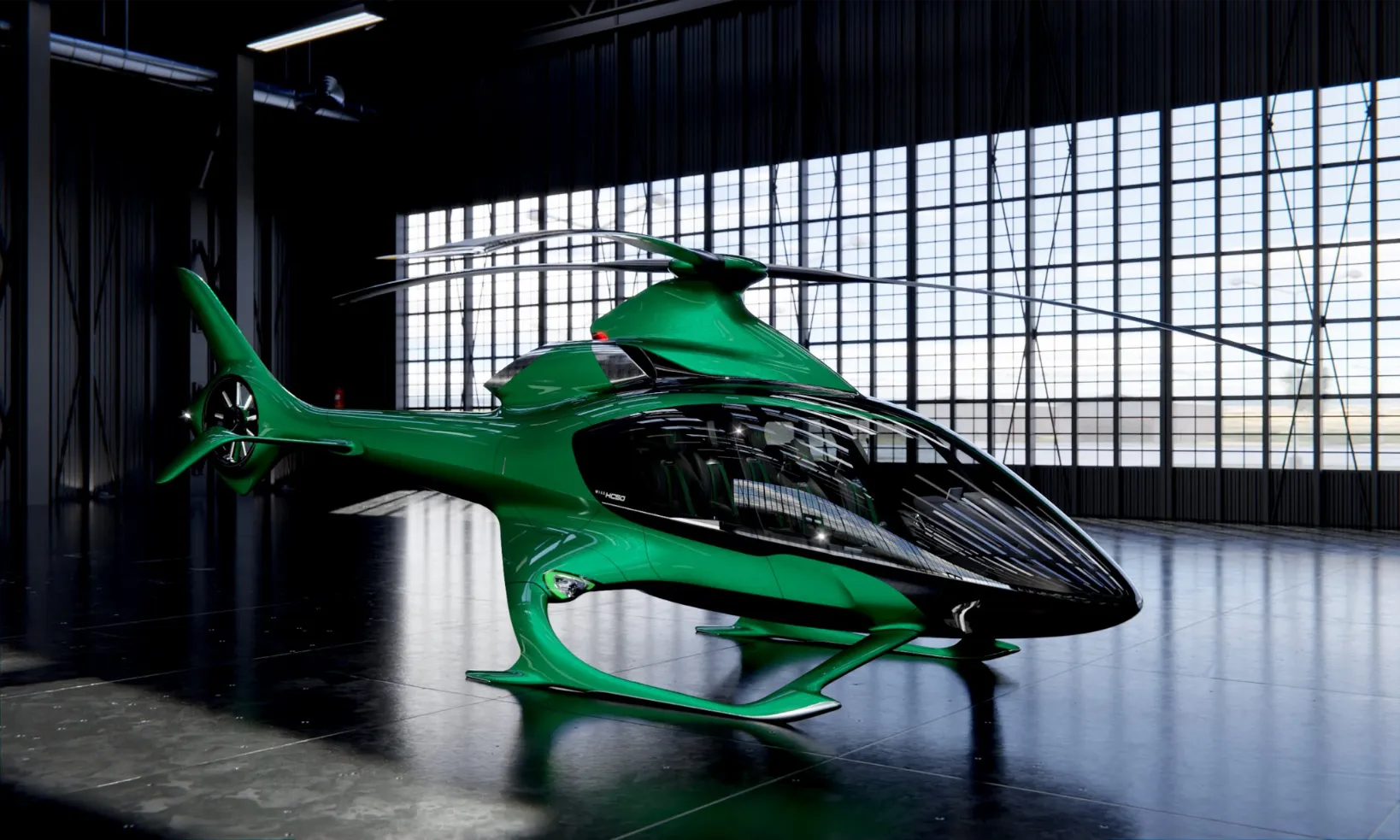
Jason Hill defines his company’s vision as ‘General Aviation 2.0’ and I believe this is very apt. Hill’s overarching commitment to innovation, along with the dedication to quality and attention to detail going into this project is absolutely fascinating to see. I’m in no doubt Hill Helicopters’ team of highly skilled engineers, leaders and designers are about to re-define the general aviation helicopter.
Hill Helicopters are going for an end to end control model, very similar to Tesla. This means they control the entire process from design and manufacturing, all the way through to test flying, sales, pilot training, insurance and post sales maintenance. Although refusing to outsource makes any project hugely more complexed, the benefits it can bring both the company and the end user are extensive. By controlling the manufacturing process, Hill Helicopters in turn control the price & availability of parts and components. Most companies stick a few 0’s on the end of the price of any part or component if they know it’s going to be used in aviation. The beauty of Hill designing and manufacturing their own parts is that they have complete control over this price, and nothing to gain by inflating it. These cost reductions can then be passed onto the customer. Once Hill rolls these helicopters out, they can also determine the demand for replacement parts and adjust their manufacturing processes to meet these demands, ensuring no lengthy delays for customers waiting for maintenance.
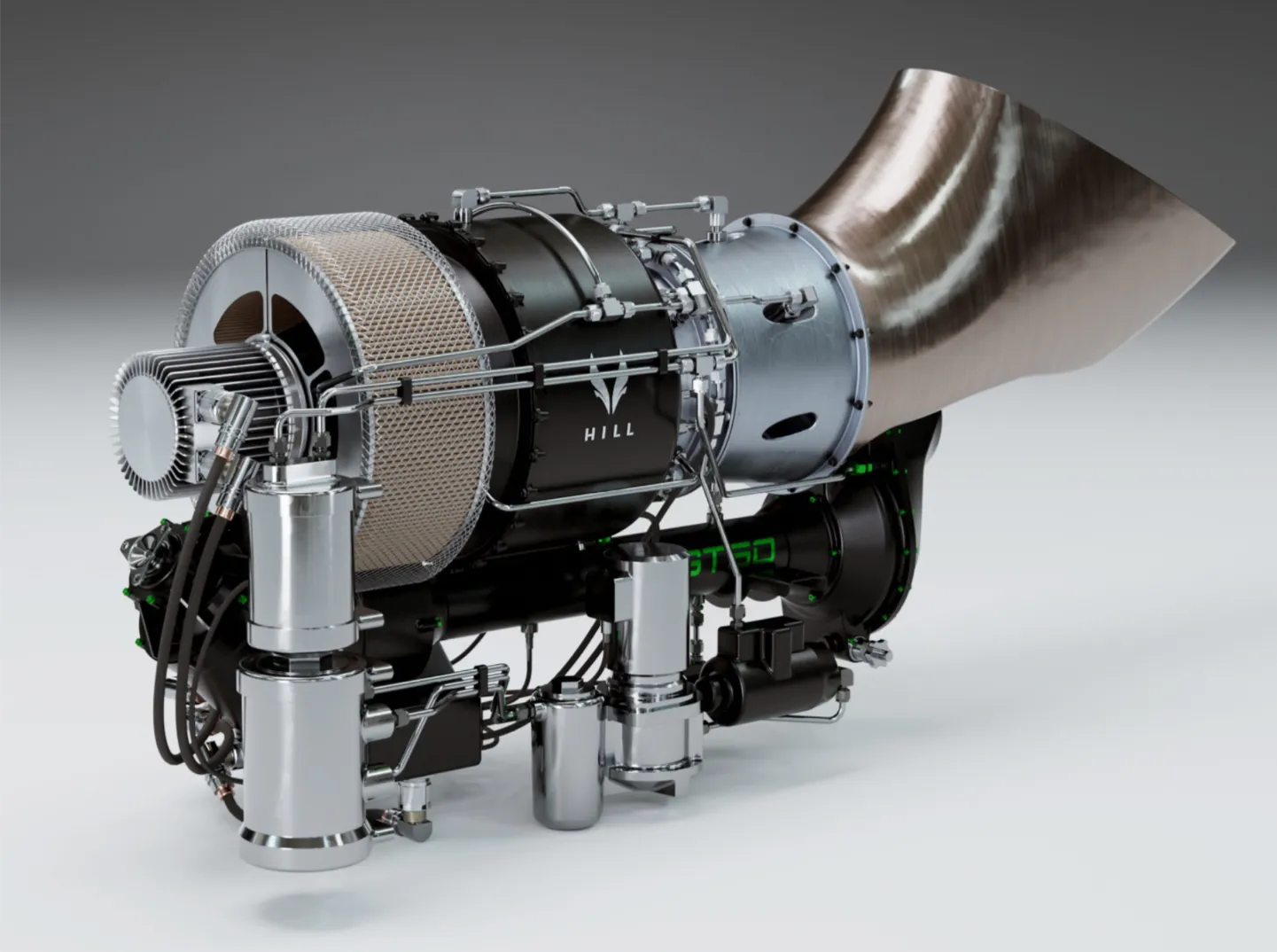
When they say end to end, they mean end to end. They’re building the helicopter from the ground up as well as every process and programme that has anything to do with the overall helicopter ownership experience. This includes designing and manufacturing everything from the door handles on their custom made carbon-fibre fuselage shell, all the way through to the GT50 engine itself and its individual engine turbine blades. They’re also building the design and production facilities and tooling from scratch too! Total control across all of this also means they can ensure precision and quality in every component.
As well as this end to end control model, the company are heavily focussed on sustainability, implementing eco-friendly practices and designing aircraft that are capable of running on fully sustainable fuel running through their bespoke GT50 turbine engine.
Everything they do just seems to make sense. Whilst this may sound like a stupid statement, hopefully you’ll understand where I’m coming from when you dig a little deeper into the project. In their online videos (of which I’ve consumed multiple hours worth!) Jason is able to break down every single part of the helicopter and explain exactly what its purpose is, why it’s designed as it is and why it functions the way it does, even down the decisions behind the light clusters on the exterior of the helicopter. Very similar to Tesla, they’ve broken things down to first principles. Why is this item present in a helicopter? Does it actually need to be there? Is there a better way to do it now things have advanced technologically? Hill himself openly claims they not introducing any new, groundbreaking technology or processes here. All they’re doing is taking the best and most advanced things already available out there and combining them into a really impressive package.

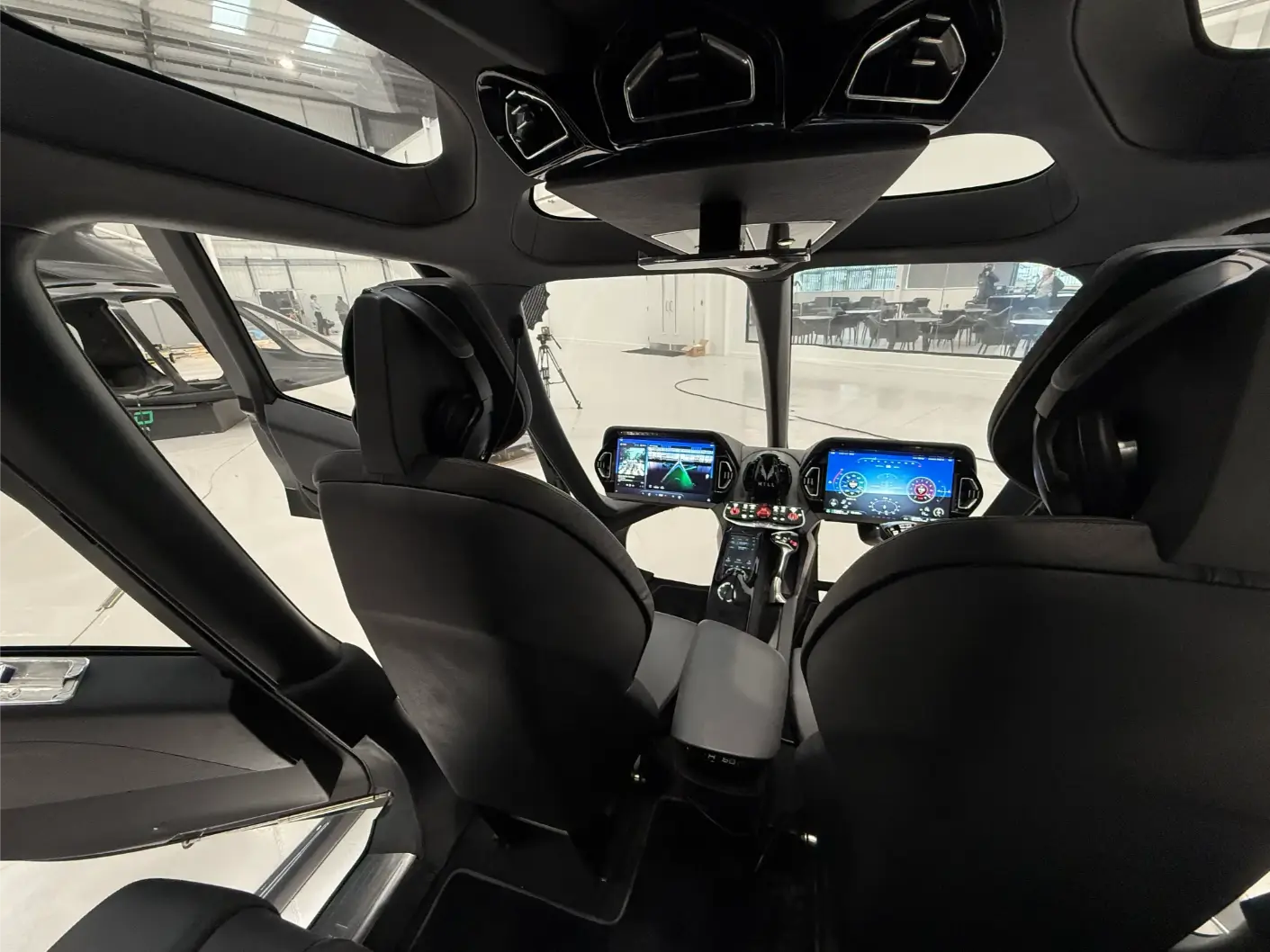
Every minor detail has been designed with comfort, functionality and usability for the end user in mind and most parts have already been through multiple iterations based on focus group reports and feedback. They’re giving their designs to their future customers, asking for ways to improve and genuinely listening. A prime example of this is the cockpits digital dashboard. They have an entire team dedicated to the layout, functionality and interaction of the dashboard. The first design was tested by users who reported a few minor issues and ways in which things could be improved and be more intuitive. The team took the feedback and got straight to work on re-designing the dash and producing effective solutions to the problems encountered by the users. A video of this digital cockpit iteration can be seen here.
Hill Helicopters are creating 2 remarkable aircraft in tandem, the HX50 and HC50. Both are essentially identical aircraft, with the main difference being the HX50 is aimed at the private owner market, whereas the HC50 is geared towards commercial operators and certified accordingly.
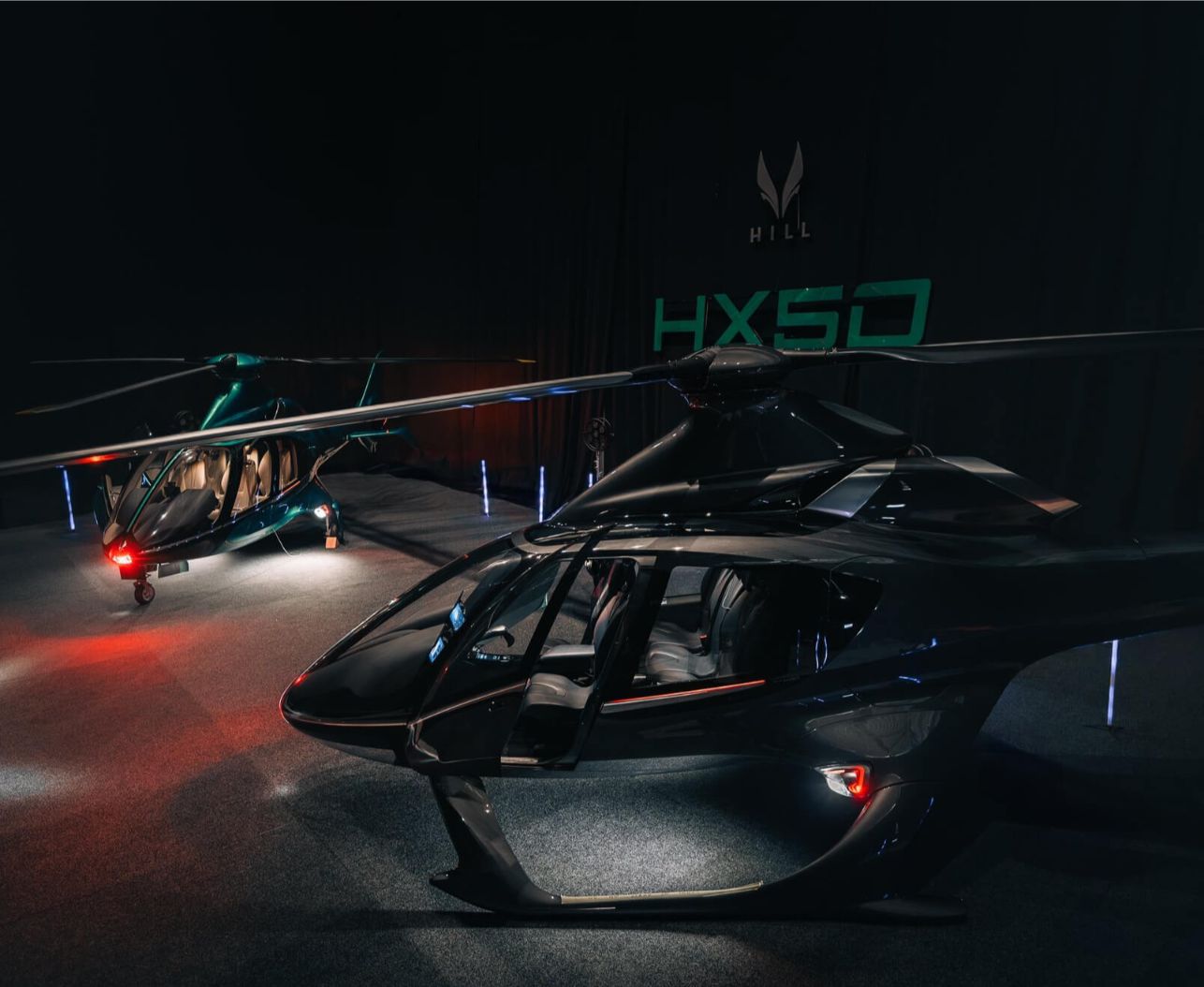
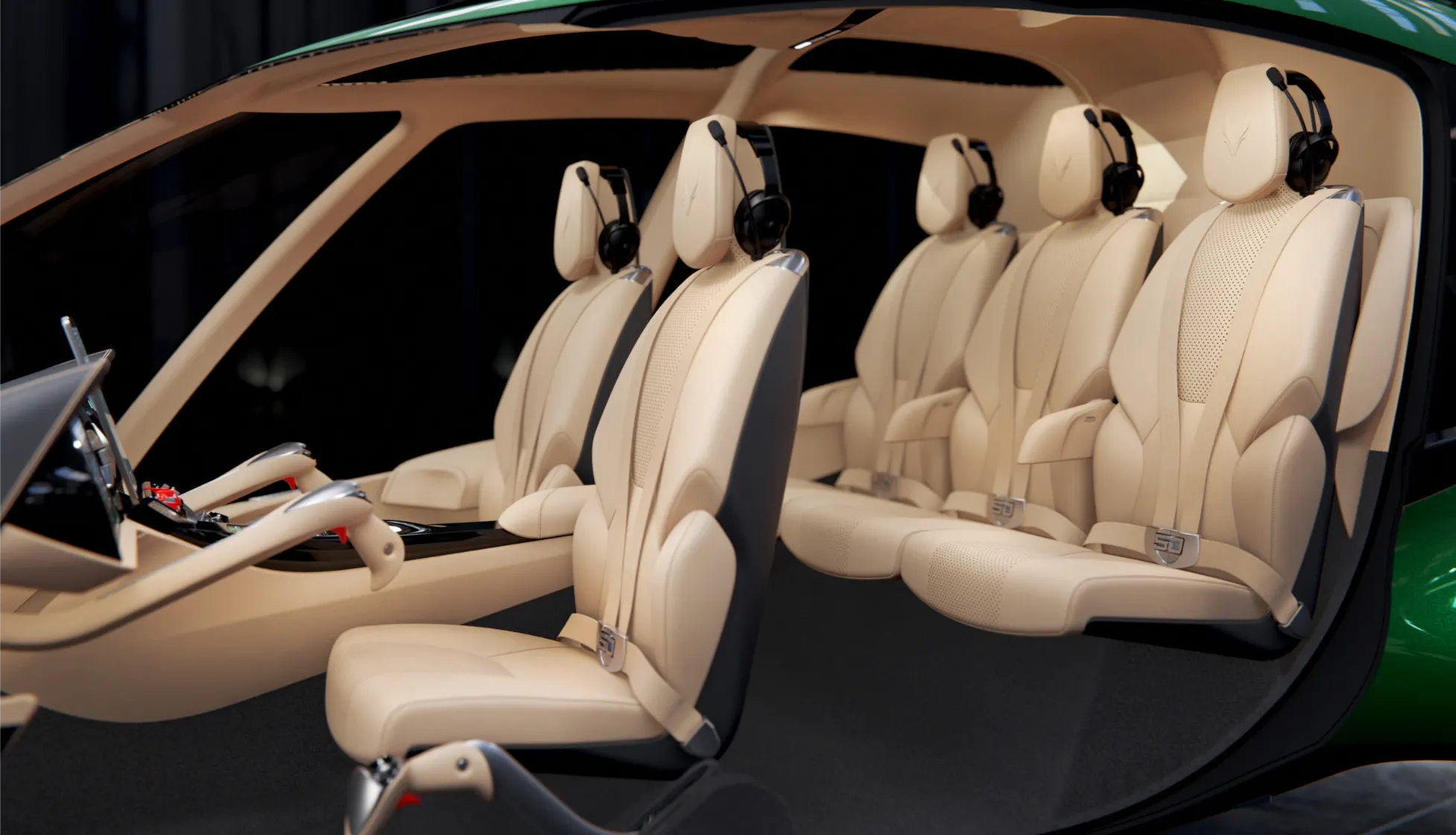
Both models have 5 seats and are available with wheels or skids, along with the same cutting-edge avionics, a sleek carbon-fiber body, and a powerful yet efficient engine, offering unparalleled comfort and reliability.
They unveiled full scale prototypes of the two models at a very Apple-esque event last year, which can be seen here. Instead of listing out all their specs, I’ll link their own page here.
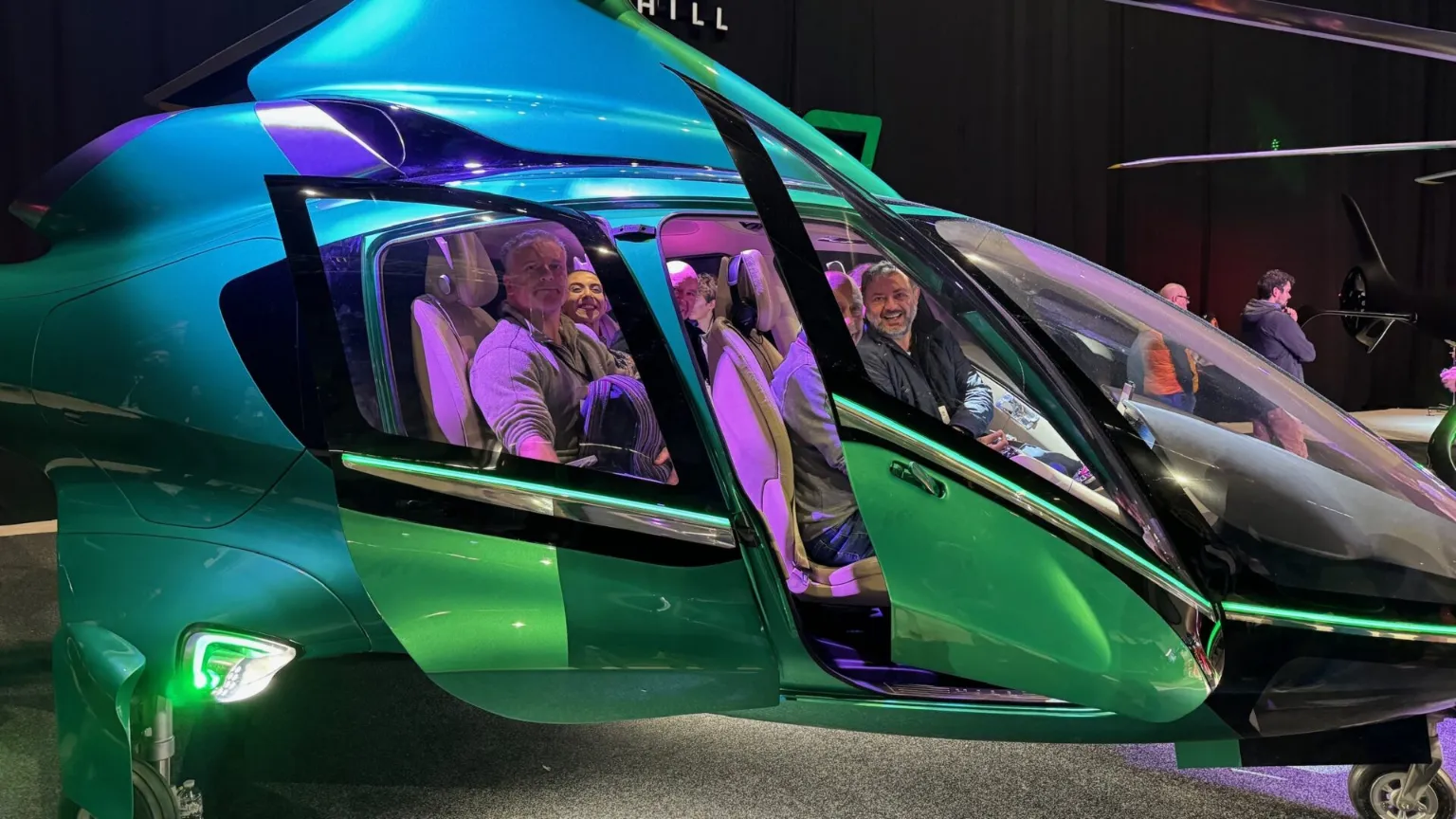
As well as undeniably beautiful design, precision engineering and sustainable manufacturing processes, Hill Helicopters is also laser focussed on safety and pilot training. Every helicopter built in their UK-CAA approved factory meets and exceeds the latest EASA, CAA and FAA certification standards. Hill have used only the best and most up-to date onboard safety systems and features on their aircraft to ensure the pilots and passengers are as well protected as they can be against the threat filled world that is aviation.
On top of this, each HX50 helicopter purchase comes with a comprehensive safety course for the pilot, with plans to also run regular ongoing safety meetings and courses for their pilot community. Not only this, but owners are invited to a 2 week factory construction course, which allows them to actually get hands on with assembling parts of their own aircraft alongside CAA-approved production staff. This is unheard of in the industry and offers the owners and pilots unparalleled insights into the aircrafts inner workings which in turn comes with massively increased understanding and safety awareness.
With an HX50 purchase, Hill also include a comprehensive maintenance training course for owners or mechanics enabling them to become qualified to maintain the aircraft.
After reading all the above, you’d expect these machines to be priced above say an airbus H125, which is a similar 5 seater turbine helicopters starting at well in excess of £1.5m ($1.9m). Well, thankfully you’d be wrong. Very wrong.
Due to the way Hill have demanded end to end control over the entire process and utilized advancements in technology that other manufacturers haven’t, they’ve kept the costs down to rates that are actually quite hard to comprehend. When the HX50 first opened for pre-order back in 2020, you could place an order for less than £400,000 ($510,000). This was however before Hill had shown much proof of concept, so it was more a risky investment than a confirmed purchase. Now, in 2024, it’s clear that Hill’s vision is very quickly becoming a reality. Whilst the price for pre-orders has increased, you can still place an order for an HX50 for a base price of £575,000 ($730,000) and an HC50 for around £50,000 more. Whilst yes, half a million pounds is a substantial sum of money, in the world of helicopters it’s a bargain price for any turbine helicopter, let alone a brand new cutting edge one. Bell’s newest 505 could be classed as a close competitor of the HX50, however even that’s in excess of £1m to place an order for one of those.
Not only is the design of the helicopter a huge step forward in so many ways, but the fact that it’s easily the most affordable 5 seater turbine helicopter ever made means that flying from A-B in a helicopter is going to be more accessible than ever before. Estimated hourly flying costs for HX50 owners including fuel, maintenance, insurance and other operational costs is around the £250 ($320) mark. That’s cheaper than running an R22, two seater piston powered helicopter! Hopefully by now you’re getting an idea of just how industry altering this helicopter’s going to be….It’s no wonder they’re already gaining lots of coverage from the likes of Vertical Mag, Aviation Week & Flyer.
This isn’t Robinson. It’s not Bell. They’re finally bringing the helicopter industry into the 21st century and it really shows. Even from the way they clearly put a lot of time and effort into keeping their followers and customers regularly updated with detailed videos led by the CEO, uploaded to their youtube chanel here and their other social media channels on a regular basis. They’re not behind the times like most other helicopter manufacturers and instead are using social media as a tool to both promote their brand but also share with the world the incredible journey they’ve embarked on.
Hill have just moved their operation and staff from Development Centre One (DC1) into a large, bespoke built factory they’re calling Production Centre One (PC1). This marks the start of their production process and a very exciting milestone in their journey.
The first flight tests are expected to take place before the end of this year, with the first models being handed over to owners in 2025, of which over 1000 have already committed to a purchase.
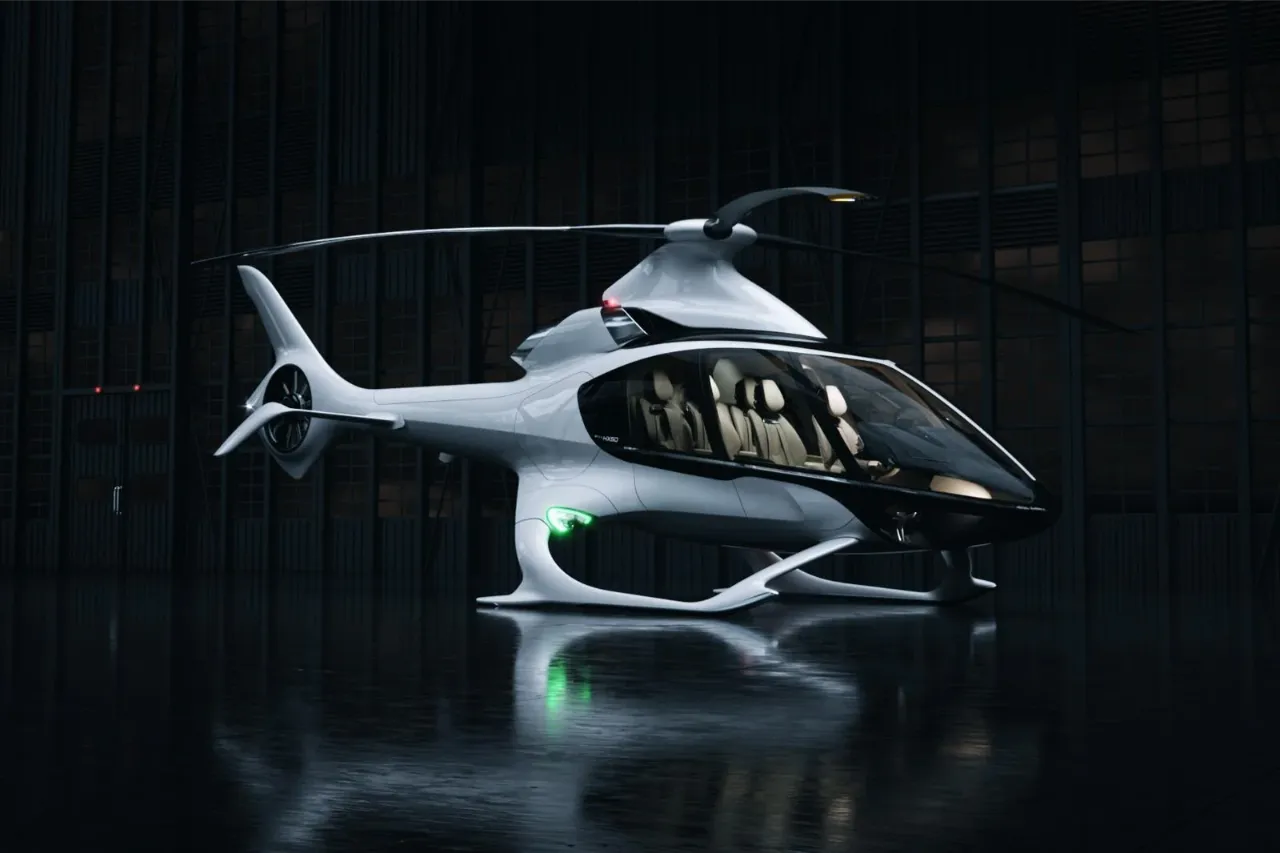
I honestly can’t wait for the day that we see the first HX50 get airborne, and I’m in no doubt that they’ll soon become the most sought after aircraft in the skies.
Hill Helicopters’ absolute and undeniable commitment to safety, sustainability, quality and affordability really sets them apart in the industry. Their focus on environmentally friendly practices and fuel-efficient designs also helps reduce the carbon footprint of aviation. Whilst Jason Hills vision is grand, it’s one that I strongly believe is going to be achievable. By pushing the boundaries of technology and design, Hill Helicopters is not only going to fill a gaping hole in the market, but they’re also setting new standards for the future of helicopter aviation.
I plan to visit the Hill HQ this summer to get a behind the scenes look at the goings on there, so if you’re interested in the next update please sign up to our mail list to be notified with the piece I’ll put together after my visit.

I was recently fortunate enough to be given a private tour of the Hill Helicopters Production Center (PC1) facility in Stafford, UK. During the hour-long walkthrough, led by the excellent Amy, I was guided around every part of the building. She walked me through the entirety of the infrastructure, doing a superb job of explaining, in detail, what each machine does and what part it’ll play in each larger process.
From the precision laser welding facility currently used to produce the outer engine casing, to the state-of-the-art gantry mill that’ll play an integral role in the production of the new aircraft, nothing was off-limits. I even got to handle various iterations of engine components that will eventually make up the greatly anticipated GT50 turbine engine.
Finally, the tour ended at the stunning HX50 aircraft. Yes, I know it’s just a mock-up, but seeing the HX50 in person, feeling it, and sitting inside it was something really special.
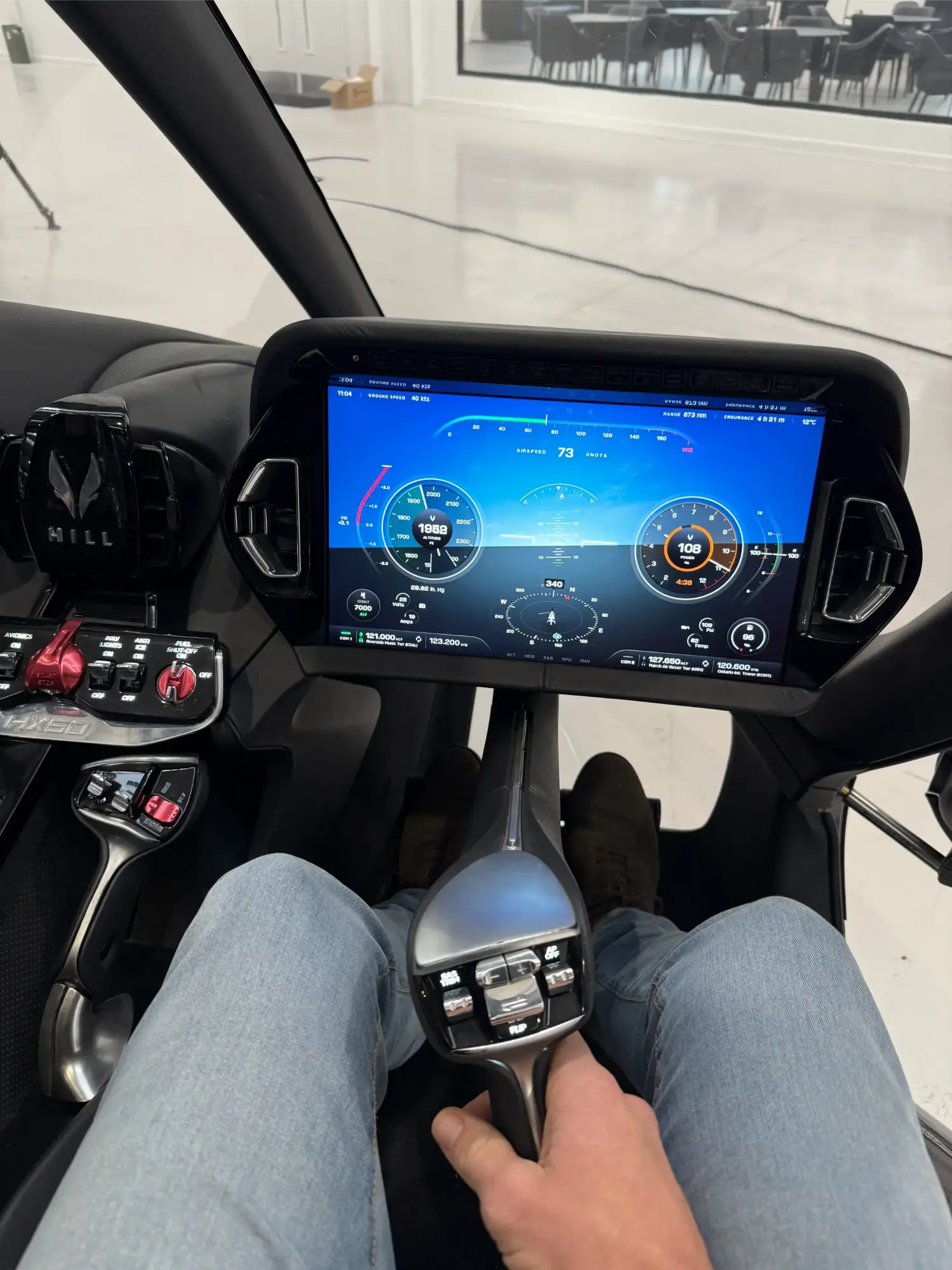
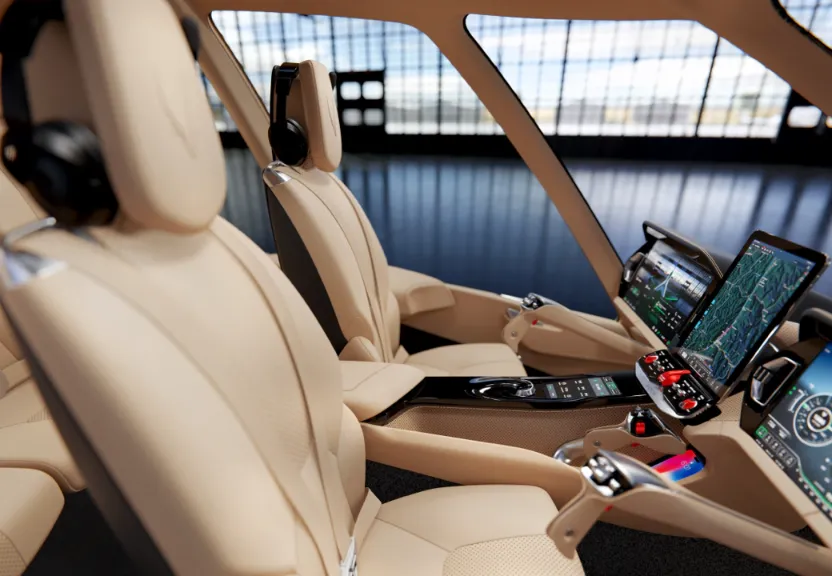
Only a few buttons in the digital cockpit were active at this stage. However, Amy was on hand to run me through the various technologies that will be implemented in the real thing, such as an infrared fly-through layer, allowing the pilot to see ‘through’ the cockpit displays. The PFD will display the return from an infrared camera located in the aircraft’s nose, allowing the pilot to see what’s behind the instrument cluster and dashboard, and be better prepared to fly at nighttime with the infrared return. While this technology isn’t new, when it comes to being used in GA, it’s groundbreaking.
The icing on the cake was the arrival of Dr Jason Hill himself. I can only imagine how immensely busy he must be, so the fact that he took the time to meet me while I looked around their HX50 is a true testament to his humility.
Unfortunately, but understandably, it wasn’t appropriate to take photos of all of this, but I’ve photo-dumped the few I did get throughout this updated section.
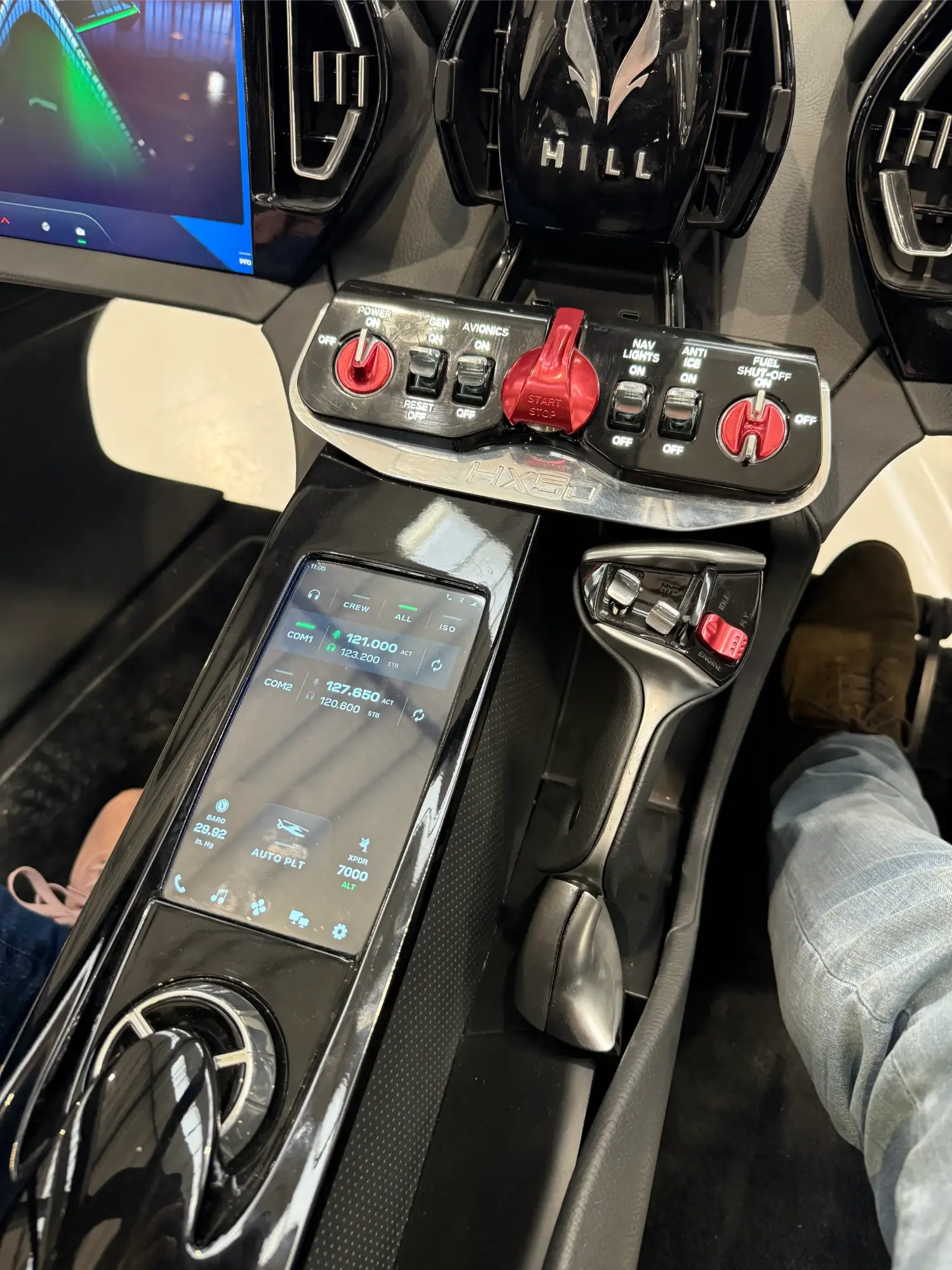
It’s been fascinating to follow Hill’s journey from early on, through to where they are now. Although they do a grand job of documenting it all on socials, it really is absolutely remarkable to be there, in the flesh, seeing this whole operation coming together. The facility was still a work in progress, with some sections still a building site, but it’s extraordinary to see the vision coming together.

A few notable things struck me during my tour: Firstly, the extent to which they’re vertically integrating the entire supply chain to keep the cost to the end customer down. Designing a helicopter is one thing, but manufacturing almost every single component in-house is a whole different ball game. Small components, such as engine bearings and fan blades, are all being designed and produced within the facility.
While this wasn’t always necessarily the plan, it sounds like they understandably couldn’t justify outsourcing these parts to existing manufacturing companies due to the extortionate price premium that companies place on any aviation-related components, not to mention the logistical issues that come with outsourcing. Instead, they’ve gone down the route of manufacturing all components themselves, for a fraction of the cost. The upfront work involved with this vertical integration is obviously on a mammoth scale. The colossal cost of the machines, testing, certification processes etc, to do this, can’t be underestimated. However, I’m optimistic that going down this route will set Hill Helicopters up for long-lasting success.
Another thing that struck me was the evident passion and purpose burning inside the team at Hill. I’m not just talking about the management. Everyone I interacted with, from the engineers working on the GT50 test bench, to their colleagues working on the moulding for the windows, all seemed enthusiastic, happy and genuinely felt a true sense of purpose being there. They were all incredibly open, welcoming, and glad to explain what they were up to and why it was relevant to the project.
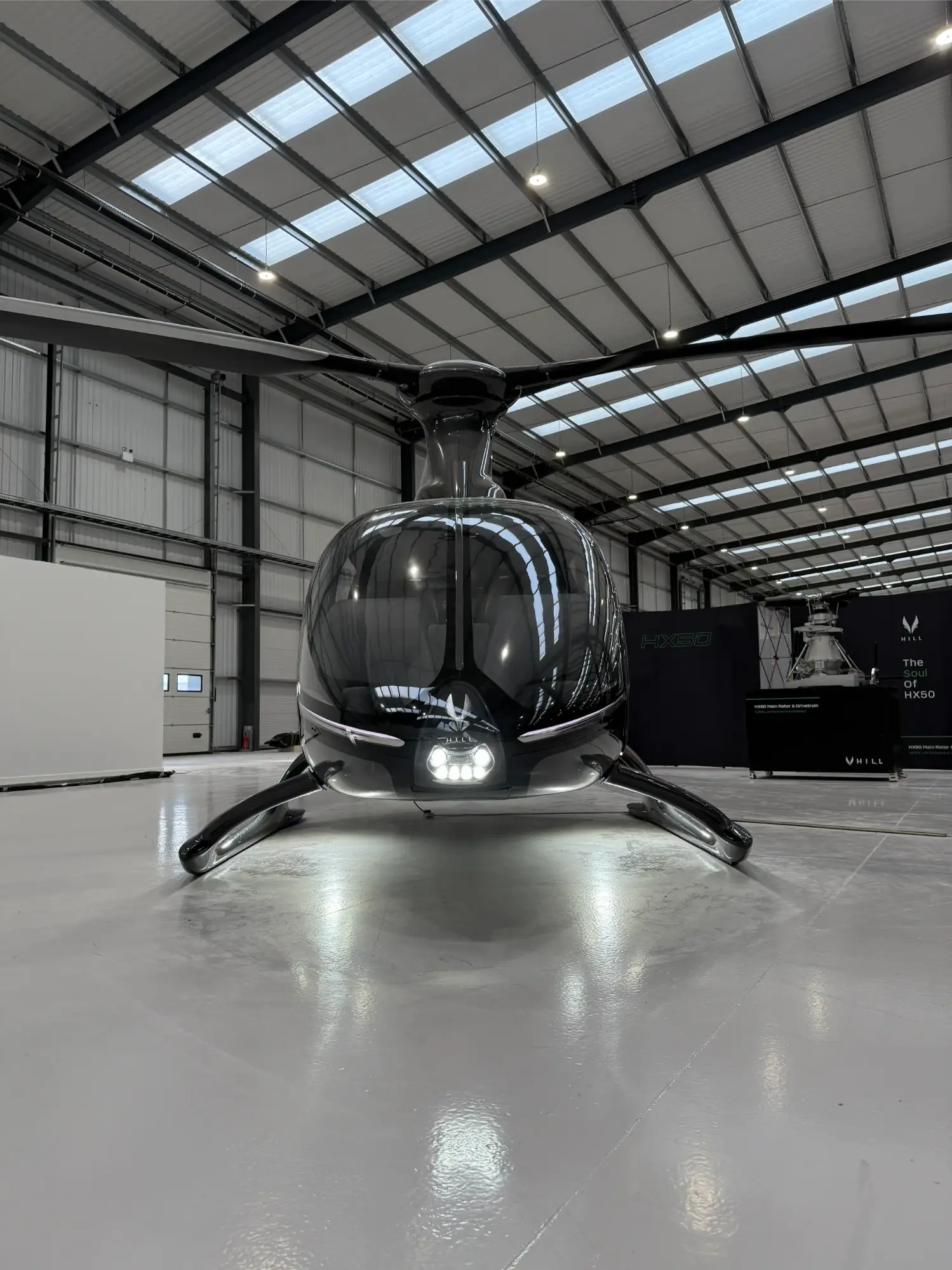
Thirdly, something I was naive to before chatting with Dr Hill in person, is that although Dr Hill is giving this project his full attention, there’s a much larger, grand plan that underpins this whole thing. HX50 and HC50 are just one small part of it. The full extent of his plans will become apparent over the next few years. If he achieves what he’s setting out to do, he’ll revolutionise not just the helicopter side of general aviation but also the fixed-wing side.
Admittedly, I’ve not toured many manufacturing facilities. However, the open-door policy at Hill (don’t take this literally; you do need to book before rocking up), along with the calibre of the entire team, is something I think further sets them apart from any competition that’s soon to be trailing in their wake. It’s incredible to see, and I feel lucky to have seen it at this stage of the journey.

What are the key milestones we’re looking forward to this year? 2025 is set to be a huge year for Hill Helicopters, with the first engine run of the GT50, and the first flight of the HX50 planned.
At the time of writing, they’ve finalised the avionics systems for the digital cockpit and are heading into the testing phase. Good progress is being made with the GT50, and the team is on track to have the engine running later this year.
Some key dates for you:
Q3 2025 first full GT50 engine test. 28th June 2025 latest
Q4 2025 first full flight test for the HX50. 20th Dec 2025 latest
I’ll continue to follow Hill’s progress closely. If they’re kind enough to tolerate my presence and endless questions again later in the year, I’d love to update you as the first HX50 takes to the skies.
Heavy Lift Helicopter Pilot Story





Learn how to become an airline pilot in 2026 with this updated guide. Training routes, costs, MPL vs ATPL, funding options, and airline advice.

When disaster strikes at 38,000 feet, split-second decisions save lives. Behind every pilot during an emergency lies hundreds of hours of rigorous training. How do airlines prepare flight crews to handle the unexpected? The answer reveals an intense world few passengers ever witness.
One Response
Sam,
Nice summary of Dr Jason Hill and the eagerness of the Hill team. Might update the time frame of the GT50 and dirts flight as both have been extended out six months.
HX50/HC50 deposit holder