How to Become an Airline Pilot in 2026 (Updated Guide)
Learn how to become an airline pilot in 2026 with this updated guide. Training routes, costs, MPL vs ATPL, funding options, and airline advice.


Share Post
As we approached London airspace on our first sector of 3 that day, following a night-stop in glamorous Scotland….ATC tell us to slow the aircraft down and expect to enter the hold* as Gatwick’s runway is ‘blocked’. Gatwick being the worlds busiest single use runway, and in the middle of the morning rush, we know this means trouble.
We do as they say and immediately start working out exactly how much extra fuel we’ll have in the tanks when we get to the hold, and therefore how much time before we’d need to divert. We already have a nominated ‘diversion alternate’ which in this case is Luton, but because we know there are already plenty of aircraft ahead of us who will likely start going there before us, we need to think outside the box and select another alternate as Luton will get full quickly, and stop accepting anymore diversions.
We could of course at this point request an immediate diversion to Luton….beating any other traffic and ensuring out spot there…..but if it turns out Gatwick’s runway re-opened just a few minutes later, when we had the fuel to sit and hold, not only would our passengers be hugely inconvenienced for no real reason, we’d also look and feel pretty silly!
I opt to continue to the hold, but nominate Bristol as the alternate I want to take fuel for. It’s far enough out that hopefully all the people in-front of us won’t think of it, so it will remain relatively empty, but it’s close enough that it’s still just a 20 minute flight. With Bristol being an airport I’ve never landed at as a Captain before, and I know it has a challenging runway, I also opt to add an additional 10 minutes worth of fuel onto our “Bristol Fuel” which gives me a buffer incase we screw the first approach up there and have to go-around for another one. It’s highly unlikely that won’t happen, but for me it felt like good airmanship, and it takes the pressure off both pilots a little.
Whilst working through the above, I tune into Gatwick tower frequency on our second radio box, so I can build up a picture of what’s going on there by listening in and hopefully anticipate how long our delay could be. It sounds like an aircraft is stopped on the runway with a nose gear issue and cannot vacate. Thats a bit of a relief as it doesn’t sound like a massive issue, just a case of a tug needing to come and connect to the aircraft and manually pull it off.
After me & the first officer have decided the exact time at which we’ll have to leave the hold in order to still get to Bristol with enough fuel, we get told the stuck aircraft has been cleared from the runway and approaches are now commencing. The bad news? We are number 12 for landing, with a ETA given to us of bang on the latest we could stay in the hold, which was still 30 minutes away.
During those 30 minutes I touch base with the passengers, and me and the first officer go over our plans incase the time of approach gets pushed back. We brief a diversion and approach into Bristol, and consider other options too.
Coming up to our approach time, we get told by ATC our approach has to be delayed by another 10 minutes. Although it was tempting to think “it’s ok now, the runway’s open so we can do away with our Bristol alternate and commit to Gatwick”….if any of the preceding aircraft end up having an issue which blocks the runway again, we still don’t know how full Luton or the other London airports are, so we could find ourselves in a very tricky situation!
After touching base with the first officer, I went with what my gut was telling me the safest thing to do here was; declare that we didn’t have the fuel to hold for another 10 minutes and request an immediate diversion to Bristol. The plan would be to go and refuel, then fly back to Gatwick. ATC replied they’d initiate it in a few moments, they just had to make a phone-call to Bristol to confirm. (We had already told ATC this would be our plan if the approach time got pushed back and asked them to let Bristol know we may be heading there).
For those few moments of silence, lots of things are running around my head – ‘Are we doing the right thing?’ ‘Are we being too cautious’ ‘Should we change our alternate to give us more fuel to stay here?’. I think all of them are valid questions and I did air them with the FO, but at the time, and on very little sleep, I wanted to make a safe plan and stick to it rather than altering it in a time pressured environment.
Next, something happened that I didn’t expect and had never heard done before….Another pilot ahead of us in the stack** who’d just been cleared to make an approach, heard our call for a diversion and asked ATC if they could swap places with us….They had plenty of fuel to hold for longer, so it may only delay them by 10 minutes, and it would save us diverting.
It was a real moment of camaraderie amongst pilots who had no idea who each-other were, and a really great feeling. ATC allowed the swap so we cancelled our diversion and made an uneventful approach into Gatwick.
A very nice email was sent to the pilot who made the offer, and a few lessons learnt from the day. Me and the FO had a quick de-brief on the ground, before we had to start setting up the aircraft for the next flight. Onto the next one…
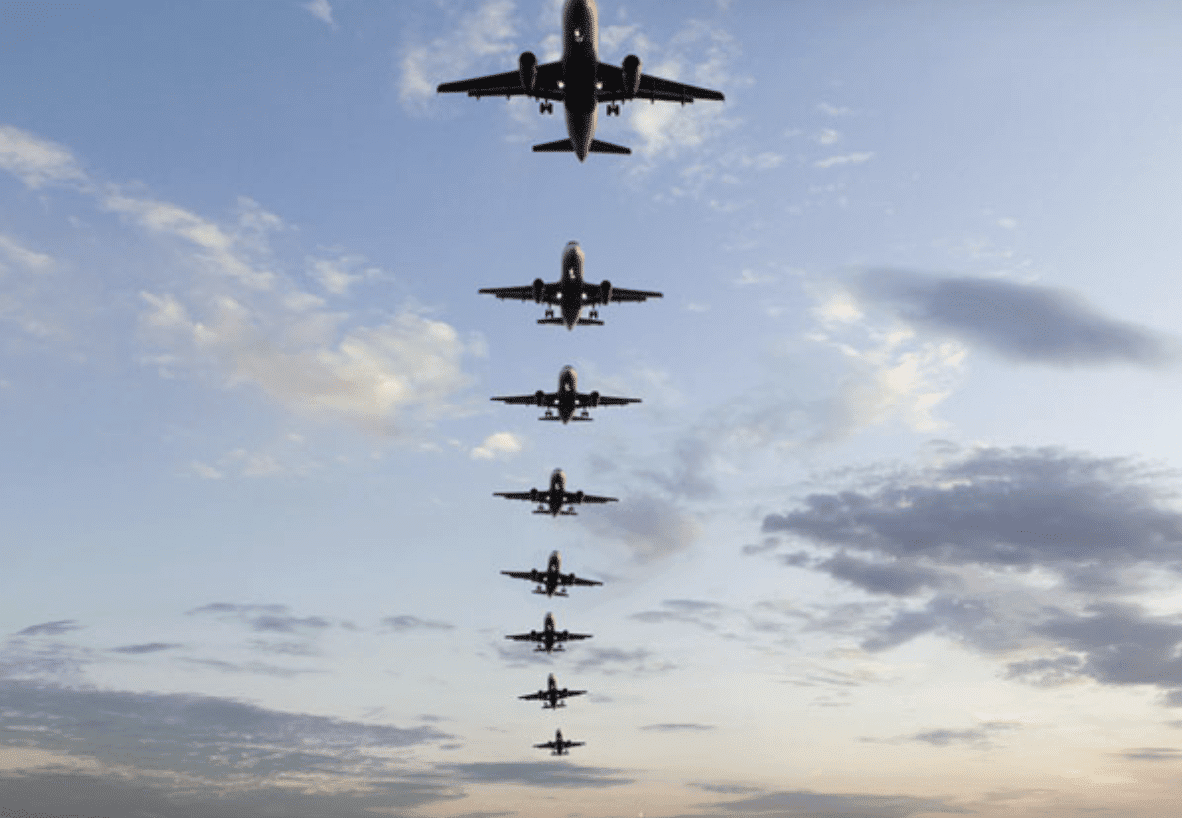
*Hold – An airbourne hold is a pre-defined area in the sky where aircraft will fly round and round in circles when ATC can’t get them straight in to land. It’s very common and happens most days during the Summer.
**Stack – The hold has a stack…which is a place for an aircraft to hold every 1000ft above the other. Planes enter the ‘stack’ from the top, and leave from the bottom. There can sometimes be 10+ layers, with each plane moving down one level when the plane at the bottom leaves to make their approach.





Learn how to become an airline pilot in 2026 with this updated guide. Training routes, costs, MPL vs ATPL, funding options, and airline advice.

When disaster strikes at 38,000 feet, split-second decisions save lives. Behind every pilot during an emergency lies hundreds of hours of rigorous training. How do airlines prepare flight crews to handle the unexpected? The answer reveals an intense world few passengers ever witness.