This one’s jumping back to my First Officer days, but the lessons learned will be with me throughout my Airline Pilot career. It was a great example in my opinion, of hazardous pilot attitudes that have no place in the airline world.
I rocked up to London Southend Airport just after midday with a spring in my step. I was here for a single Amsterdam & back. A day as short and simple as this on paper is relatively unheard of in the pilot world! I had dinner plans that evening with my partner which I’d been looking forward to for a long time. It looked like the only foreseeable challenge would be the weather in Amsterdam, which at the moment was heavy thunderstorms.
I was flying with a Captain I’d never flown with before. She seemed in good spirits at the briefing table, until it came to our fuel decision. Or in this case….her fuel decision. She chose to operate the sector out to Amsterdam, and said she’d like to take ‘plog fuel’ i.e the exact amount of fuel denoted on our flightplans.
This fuel figure doesn’t take into account adverse weather conditions, airborne holding or any other abnormal delays. As pilots we’d usually add fuel onto this figure if we anticipate any sort of delay.
The weather in Amsterdam was looking diabolical so it was an almost certainty in my head that we’d expect some sort of delay, a point which I immediately aired with her. She dismissed my line of thinking, after which I directly communicated the fact that I wanted to take more fuel, and was thinking more around the 1000kg extra mark (25 mins of holding fuel).
It was at this point I started to notice some hazardous pilot attitudes displayed by the Captain. Of the main 5 hazardous attitudes, I believe it was a combination of macho (I can do this), invulnerability (it won’t happen to me) and anti-authority (don’t tell me what to do). She again dismissed my desire for extra fuel, saying it simply wasn’t necessary.
Had this been an imminent safety issue….I would have pushed my stance harder to the point of intervening. Being a relatively inexperienced FO however, I wasn’t going to argue too much with a very experienced Captain about a decision that wasn’t life or death. This would ultimately come down to a passenger convenience issue. If we had to hold and didn’t have the holding fuel, we’d be diverting. A diversion in itself isn’t a safety issue, but is a pain for everyone involved. The divert airport (Rotterdam) looked ok weather wise, so I was happy to just see how correct the Captain was on this one.
We depart London’s Southend Airport and sure enough, 20 minutes later we’re put straight into the airborne hold for Amsterdam due to weather delays. There are 5 other aircraft below us in this hold, and this is only one of multiple other holds in the airspace.
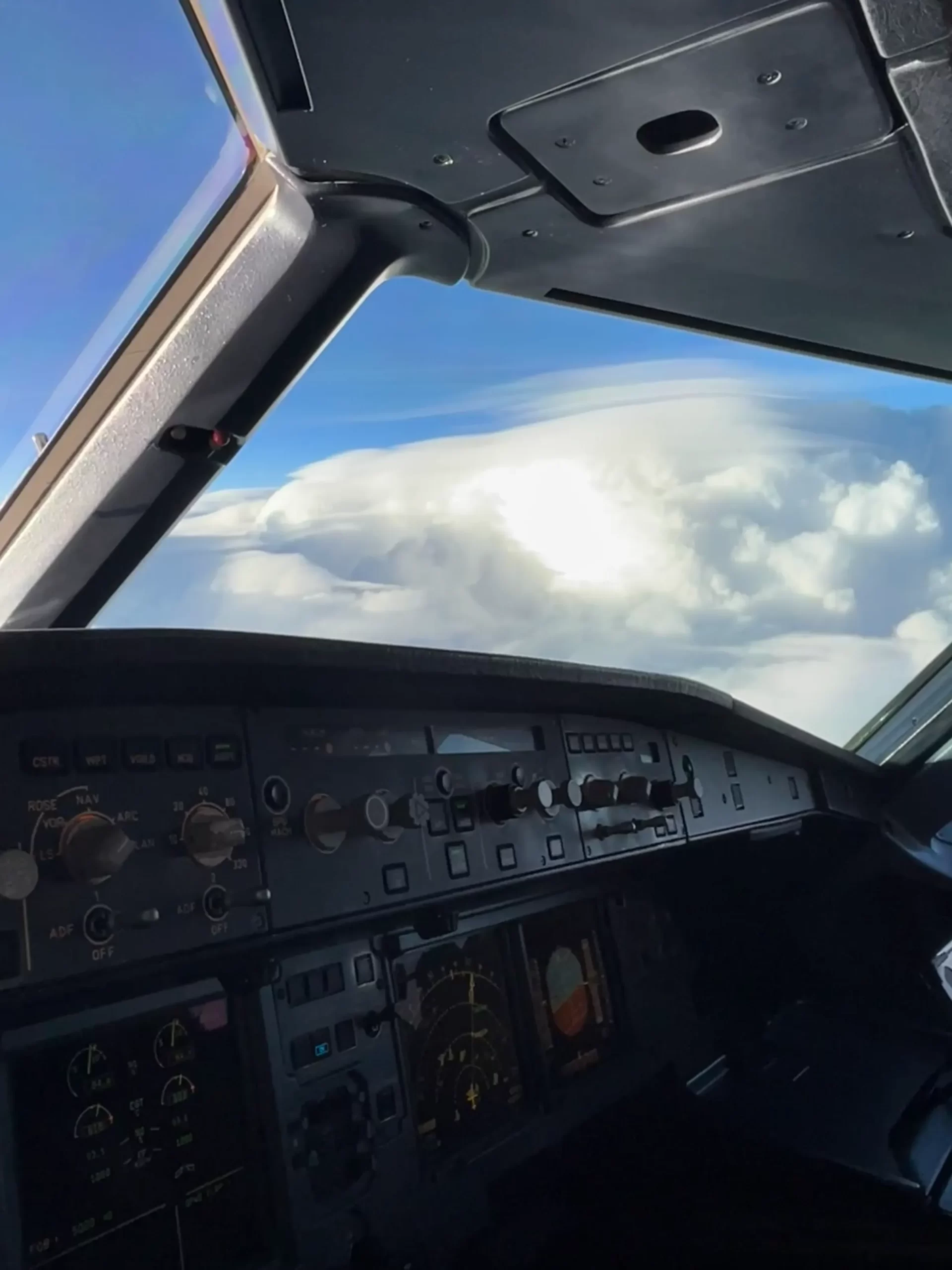
We have enough fuel to remain in this hold for 10 minutes before we’re down to the absolute minimum fuel required to safely divert to Rotterdam. I ask ATC if we can have an EAT (estimated approach time). We’re given one in 45 minutes time.
Whilst we can sometimes ‘commit’ to an airport (do away with our alternate fuel) if we’re sure we can land at our destination airport, on this occasion Rotterdam was such a close alternate that required so little fuel to get to, that if we stayed in the hold for another 45 minutes we’d be well into burning our ‘final reserve’ fuel (30 minutes worth)….fuel that should never ever get touched. (Read more about committing in another diversion story here)
The decision was immediate, we would have to divert to Rotterdam. The workload immediately ramped up. It was an extremely busy 15 minutes programming the aircraft, briefing the arrival, liaising with the company over our ACARS and letting ATC know our intentions.
Once on the ground in Rotterdam, the chaos continued. Our plan was to refuel, then depart again and join the hold for Amsterdam. By the time we landed and sorted ourselves out with new flightplans etc, the storm cell from Amsterdam had now drifted overhead Rotterdam. The refuellers were refusing to refuel our aircraft due to the lightening (totally fair enough!)
Due to the delay, we now had passengers wanting to get off in Rotterdam and make their own way to Amsterdam. If they do this, it means getting an entire ground crew out to get their bags off the aircraft. It also means lots more paperwork, headache and complications for us, so we have to do our best to convince the passengers to stay on board.
After a stressful hour of being sat on the ground in Rotterdam, still no fuel on the aircraft, I have to call my partner to cancel our dinner plans that evening. Immediately after this call the Captain says to me “You seem annoyed?”…..the audacity!
After another hour wait on the ground, we finally get airborne for the very short hop over to Amsterdam and then back to Southend, arriving around 4 hours after our planned arrival time.
Single Amsterdam my ass!
Why the Captain was so dismissive of taking extra fuel is beyond me. Whilst our company urge us not to take more fuel than we think we’ll need, when you know you’re going to be up against thunderstorms and delays, I think it’s very sensible to load up on fuel. I’m unsure if she was trying to prove something or was just having a bad day. Regardless, I learnt a few good lessons;
- Beware of hazardous personalities in aviation
- Take onboard the First Officers’ suggestions. Even if you totally disagree with the FO, take the time to explain why you disagree and hear their thoughts, or try and reach a compromise.
- When it comes to fuel, go with whoever wants the highest figure (within reason!)
Helpful Links
AOPA Guide to Hazardous Pilot Attitudes
More Hazardous Attitudes Info